10 Wrestlers You Didn't Know WWE Re-Signed
10 incredibly random wrestlers that WWE brought back

Oct 28, 2026

10 incredibly random wrestlers that WWE brought back
Oct 28, 2026
When a wrestler leaves WWE, it rarely means the door is completely closed on a return further down the line. A whole host of wrestlers have come back to work for the company, with some even having three or more runs in the organisation.
There have, however, been some performers who actually re-signed with WWE but they never actually made their way back to TV before they were on their way out of the door again.
These are 10 wrestlers you didn’t know WWE re-signed.

One of the most innovative and spectacular wrestlers of the 1990s, 2 Cold Scorpio wowed audiences in New Japan, WCW and ECW before signing with WWE in 1996.
Re-christened Flash Funk, he had a solid, if unexceptional, run in WWE’s mid-card before being let go in early 1999, with substance abuse issues a factor in the company’s decision to show him the door.
Scorpio found his feet in Japan, first for All Japan and then for Pro Wrestling NOAH, and he was actually NOAH’s reigning Hardcore Openweight Champion when he agreed to wrestle a dark match for WWE in August of 2006.
The high-flier impressed, while his friend Booker T pushed for him behind the scenes, and Scorpio was signed to a new deal after finishing up his commitments with NOAH.
Hired with the intention of working on the SmackDown brand and given his old Flash Funk moniker back, the former WCW World Tag Team Champion worked a winter tour of Europe and one dark match before being released in May 2007.
Despite letting him go, WWE brought him back as Flash Funk, as a participant in a battle royal on Raw’s 15-year anniversary show that December.

With his height, physique and imposing presence, it’s a wonder that WWE didn’t do more with Tyson Tomko, who will be best remembered for his role as Trish Stratus and Christian’s ‘Problem Solver’.
Once Captain Charisma moved to SmackDown, Tomko started to drift and formed a tag team with the equally aimless Gene Snitsky.
Tomko knew he was spinning his wheels and, after being asked to put over Sean O’Haire in a dark match, expressed his unhappiness to John Laurinaitis. WWE’s talent relations chief quickly secured Tomko a job with New Japan Pro-Wrestling and granted him his release on the understanding that Tomko would be back in a year. That didn’t quite happen as planned, though, as Tomko’s old friend Christian got him a job in TNA.
One year turned into 30 months, but Tomko was re-signed by WWE in November 2008. Unbeknownst to Vince McMahon, Johnny Ace re-signed Tomko despite the fact that he had a torn pectoral muscle. McMahon thought Tomko looked awful during a dark match and refused to use him before releasing him in March of 2009.

The arrival of Umaga in 2006 heralded the return of a pro wrestling trope from what seemed to be a bygone era of the foreign savage with his handler/manager in Umaga and Armando Alejandro Estrada.
While the idea seemed hugely dated even in 2006, Umaga and Estrada worked well together and the manager did plenty to enhance Eddie Fatu.
Unfortunately for Estrada, he was deemed surplus to requirements during the whole Battle of the Billionaires saga, dropped as Umaga’s manager, and written out of storylines before resurfacing as the general manager of ECW.
Released in November of 2008 after months of inactivity, Armando was re-signed two years later, but once again did nothing for months before reappearing by Tyson Kidd’s side as a one-off during a storyline where Kidd was searching for a new manager.
Incredibly, Estrada would remain on the books for another 14 months before being released once again.
If you didn’t know Armando had re-signed, you would have assumed the appearance alongside Kidd was a one-shot deal, but he actually received a paycheque for the better part of two years for doing absolutely nothing.

Arriving on WWE screens as John Cena’s new running buddy, Redd Dogg, Rodney Mack lasted just two weeks in the role before being moved from SmackDown to Raw, where he was given Teddy Long as his new manager.
WWE looked to back the Mack with an early mid-card push and his team with fellow Thuggin and Buggin Enterprises member Mark Henry could have gone places had Mack not suffered an ill-timed injury that kept him sidelined for several months.
Mack would return, but he was relegated to house shows and Sunday Night Heat before his release in November of 2004.
The rebooted ECW brand gave Mack another shot with WWE as Paul Heyman requested Mack be re-signed with the intention of him working a programme with, and putting over, CM Punk as the Straight-Edge Superstar continued to climb the ladder.
That creative pitch was overruled after Rodney’s return and he worked nine non-televised ECW live events before being let go for the second time – which was also, incidentally, the second time his wife, Jazz, was also released on the same day as him.

Nick Dinsmore was in the WWE system for years, toiling tirelessly in developmental territory Ohio Valley Wrestling with little hope of being called up to the main roster.
Dinsmore was widely recognised as a very good professional wrestler, but wrestling alone wasn’t going to cut it on the WWE main roster and he figured he needed a gimmick if he wanted to progress in his career. Eugene was his ticket out of OVW and, for a while, the special nephew of Raw General Manager Eric Bischoff was one of the most heavily pushed acts on WWE television.
That didn’t last forever, though, and the character running its course coupled with Dinsmore’s personal demons led to Eugene’s release in the summer of 2007.
The next, and last, time WWE fans would see Eugene on television was the August 10, 2009, episode of Raw, where he lost a Contract on a Pole match to The Miz masquerading as The Calgary Kid.
You would be forgiven for assuming this was a one-and-done deal, but Dinsmore had actually been hired back full-time a month earlier. WWE decided to release him days after his Raw return because they were unhappy with him showing up out-of-shape.

On the September 23, 2004, episode of SmackDown, Gangrel made a one-night return to WWE as part of the storyline between JBL and The Undertaker, teaming with Viscera in a Handicap Match loss to The Deadman.
The former Mabel stuck around for a long while afterwards, becoming the World’s Largest Love Machine and then Big Daddy V, but Gangrel wasn’t seen on WWE TV again until the earlier-mentioned battle royal on the 15-year anniversary edition of Raw.
WWE had, in fact, signed the former leader of The Brood to a deal shortly after he put over The Undertaker. They just didn’t use him on TV because Gangrel was hurt, before they sent him to work off the rust in OVW once he’d healed up.
Released in July of 2005, Gangrel was called back a year later and offered another deal, this time to work on the rebooted ECW brand as the leader of a new faction of vampires.
Kevin Thorn and Ariel showed up on Sci-Fi but Gangrel was nowhere to be found, with WWE management unhappy with the weight Vampire Warrior gained and they decided not to book him on TV.
Gangrel was assigned to be a sort of player-coach for the Deep South developmental territory before being dropped as part of a batch of mass releases in January of 2007.
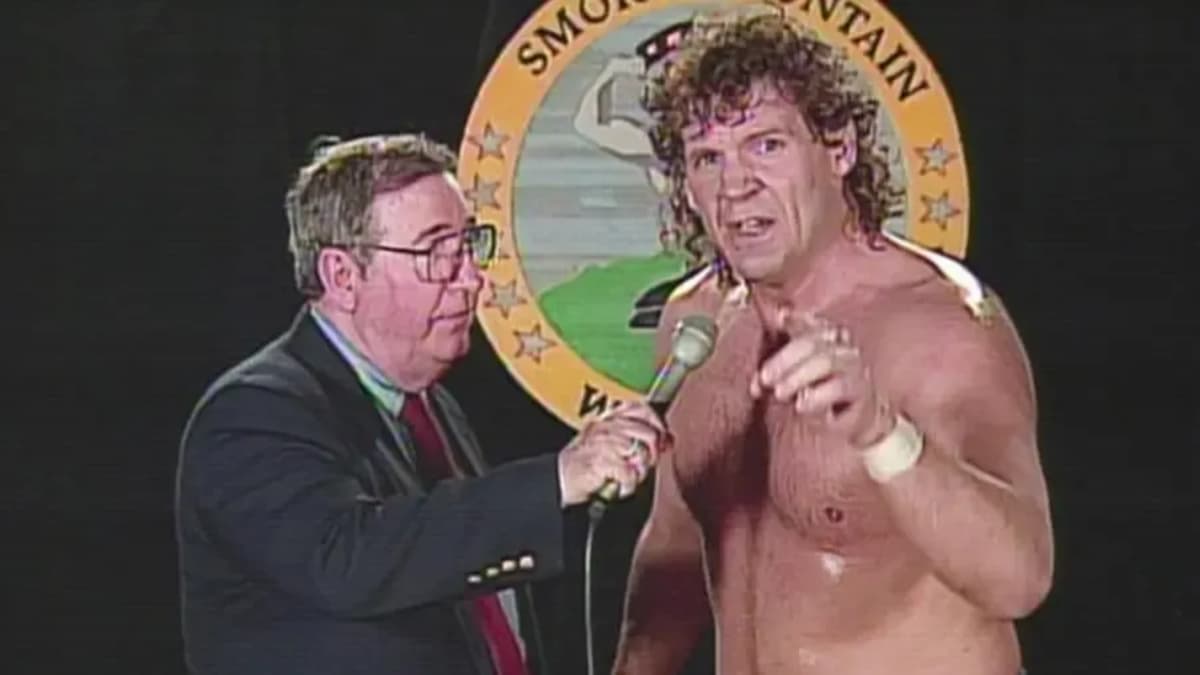
Running low on talent in 1996 and with the pickings somewhat slim due to the Monday Night Wars, WWE brought in a handful of dependable journeymen on the recommendation of Jim Cornette.
One of them was Tracy Smothers, the Wild-Eyed Southern Boy who had worked for WCW, Smoky Mountain, and beyond.
A hell of a hand and a hard worker, Smothers was dubbed Freddie Joe Floyd - the name a rib on Freddie Joe ‘Jack’ and his brother Floyd ‘Gerald’ Brisco - and Smothers basically became a jobber-to-the-stars, showing up intermittently to put someone over on television.
He worked the indies after his release and found a home in ECW, but with the fortunes of Paul Heyman’s promotion fading, Smothers opted to return to WWE in the summer of 1999.
A handful of little-seen squash match losses on shows like Shotgun Saturday Night, Sunday Night Heat and Jakked are the only evidence of this second run, which also saw Tracy work a couple of house shows and a bunch of dark matches.
Smothers was working for the WWE feeder farm in Memphis in December of 2000 when he was wished the best of luck in his future endeavours.

Following his first WWE exit, Davey Boy Smith Jr. looked to reinvent himself, showing WWE exactly what they were missing out on when he improved his all-around game significantly while primarily working overseas for New Japan Pro-Wrestling.
WWE were watching and, after finishing up with Major League Wrestling, the son of the British Bulldog returned to WWE after a 10-year absence in July of 2021. He proceeded to work exactly one dark match before being released that November.
According to Smith, he was given good reports for his performance in the match and assured that his debut on SmackDown was imminent, with backstage vignettes planned for a new gimmick as ‘The Stampede Stud’.
Regrettably, Davey Boy Jr. got a bad case of COVID and had to sit out for a few weeks, during which time the company seemingly forgot about their recent acquisition. He was waiting to come back and keeping himself in top shape when he got the call that he was being released.
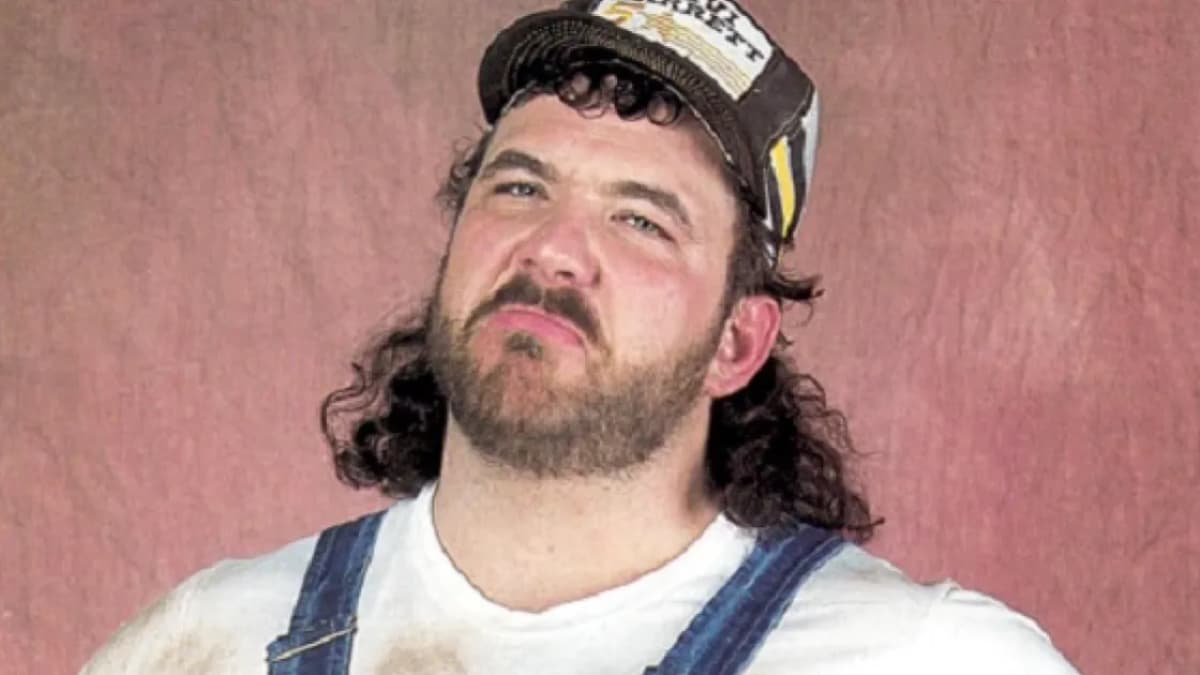
Paul Levesque gets a lot of flak, but he should be commended for looking out for the people who helped him get to where he is.
One of the people who helped The Game along the way was Mark Canterbury, AKA Henry O. Godwinn. When Canterbury was down on his luck and grieving the tragic loss of his son, Paul Levesque was there to lend a helping hand.
Despite being in his mid-40s and reportedly looking far from good during tryout matches, Triple H made sure Canterbury was re-hired by WWE in September of 2006. He then worked several more dark matches, as well as a few house shows, forming a new hillbilly tag team with developmental prospect Ray Gordy (son of Terry).
Evidently, WWE decision makers didn’t think Canterbury’s work was up to par and Drew Hankinson was instead paired with Gordy, the duo subsequently debuting as Jesse and Festus.
The writing was clearly on the wall and Godwinn was released in May of 2007. Unless you were in the arena for one of his matches, you likely weren’t aware of this most unlikely of comebacks as he never made an appearance on TV before being cut.

While primarily not an actual on-camera performer, Vince Russo was, in many ways, as notable as any in-ring talent due to being, in part, responsible for WWE’s runaway success during the Attitude Era as a key member of the creative team.
The addition of SmackDown to his workload convinced Russo to leave WWE and jump to WCW where, as head writer, he did much to tank both the company and his own reputation.
In June of 2002, though, Vince McMahon rehired Russo, who at the time was unofficially submitting ideas to early-day TNA. Russo was brought back to head the WWE creative team, where he would report to Stephanie McMahon in a bid to combat declining ratings.
The next day, after Russo completely buried himself with his outlandish ideas during a meeting with the McMahons and the rest of the creative team, those plans had changed and he was demoted to creative ‘consultant’.
That only lasted a couple of weeks before Russo, who never actually put pen to paper on an official WWE contract, left to join TNA proper.