The First Shot Of The Monday Night Wars: Lex Luger's Defection From WWE To WCW Behind Vince McMahon's Back
The full story of Lex Luger's shocking jumping from WWE to WCW to kick off the Monday Night Wars

Jul 22, 2026

The full story of Lex Luger's shocking jumping from WWE to WCW to kick off the Monday Night Wars
Jul 22, 2026
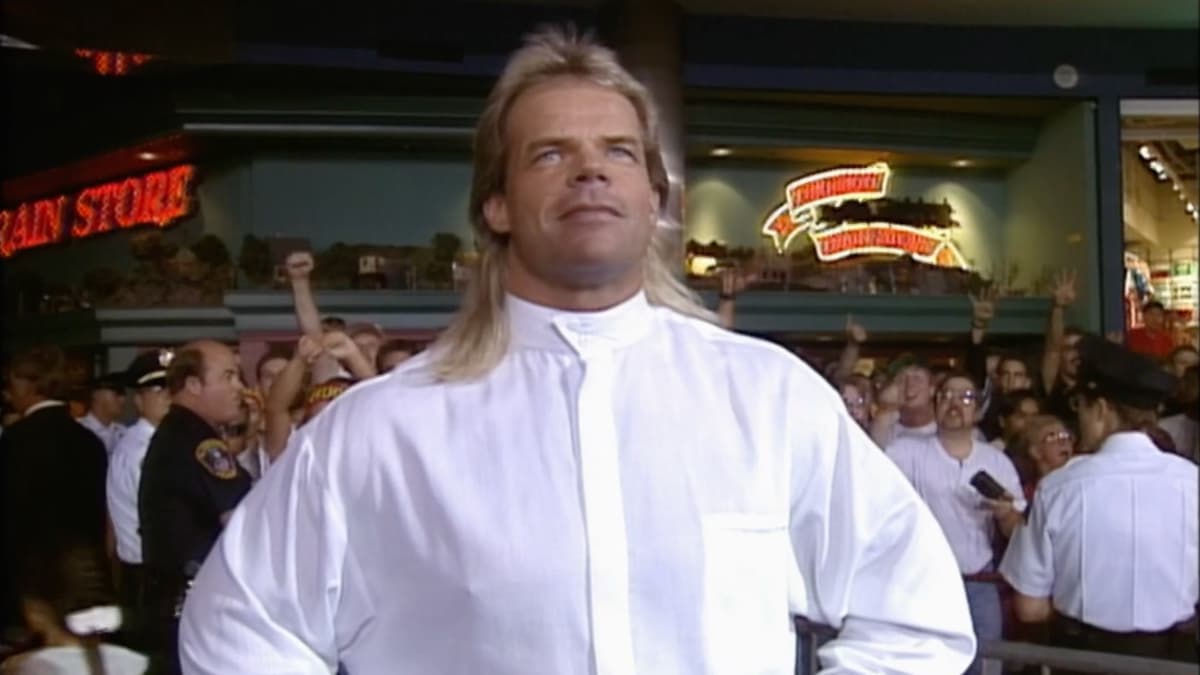
On September 4, 1995, WCW Monday Nitro aired for the very first time ever, and with it came the advent of the Monday Night Wars. The first Nitro ran unopposed due to coverage of the US Open pre-empting WWF Monday Night Raw for the week.
With that annual roadblock in place for Vince McMahon, Eric Bischoff knew he could have the undivided attention of the general wrestling audience for Nitro's initial rollout. To leave his mark on the night, the WCW executive vice president served up some unusual sights and sounds for the curious fan, including a wrestling ring situated inside a shopping mall, former NFL roughneck Steve McMichael on commentary, and a huge return in the form of Lex Luger, just days after he was involved in the main event of WWF SummerSlam.
Having been given a primetime slot on TNT by Ted Turner himself, Eric Bischoff was positioned in the strongest possible way to lead WCW into battle with Vince McMahon’s World Wrestling Federation. That position meant high expectations, however.
Bischoff and his top officials were being tasked with taking WCW, an entity that hadn't once been profitable during Turner's six-plus years as company owner, and jockeying for market supremacy with WWF, that same WWF who, as the pro wrestling territories died off one by one, remained unchallenged as the gold standard of mainstream American wrestling.
Even if WWE were in far less than mint condition following scandal and audience turnover by 1995, it was still going to take a lot of force and firepower for WCW to remove the eternal champion from their perch at the top.
Bischoff and his closest confidantes put together what they hoped was a winning strategy to make Nitro as formidable as possible. A part of said strategy stemmed from a focus group study on what their potential audience wanted to see on a wrestling programme, with the results saying they wanted more action, more surprises, and more of a sense that anything could happen at any time.
Since WWF had become accustomed to taping up to four weeks of Raw in a single night to save money, Bischoff knew that Nitro had to be live with the idea that anything can happen when a show is taking place at that exact moment.
A major shock would be the perfect way to begin the Nitro era with a bang and in August 1995, just weeks before the first Nitro would be broadcast from Mall of America in Bloomington, Minnesota, Eric Bischoff received a phone call from Sting, who informed the WCW EVP that Lex Luger was working for the World Wrestling Federation without a contract.
Sting had long been best friends with Lex Luger, also the wrestler he defeated to win his second WCW World Heavyweight Championship, and they ran in the same circles dating back to their time together in Jim Crockett Promotions.
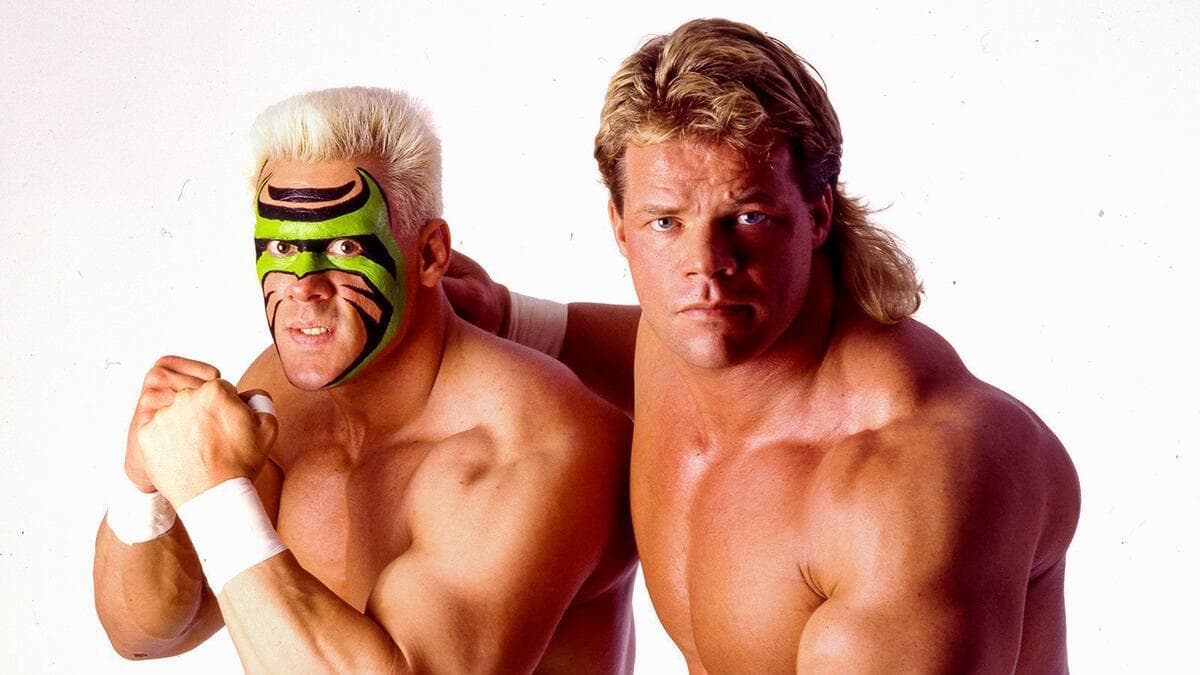
Luger’s chiselled physique and flowing blonde mane meant he was destined for success in professional wrestling in the 1980s and 1990s and, for several years, WCW teased pulling the trigger on Luger as the next top champion in the promotion, only to pull back and book him to fall short against arch-rival Ric Flair on several occasions.
By 1991, Luger was about to defeat Flair for the Big Gold Belt at the Great American Bash, only for those plans to be scuppered when WCW Vice President Jim Herd made a complete mess out of everything ahead of the pay-per-view by firing Flair two weeks before Luger could beat him for the championship.
Luger won the vacant title at Great American Bash anyway, defeating Barry Windham in a Steel Cage Match, but his reign was less than thrilling, especially when it was equipped with a sudden heel turn that no fan wanted.
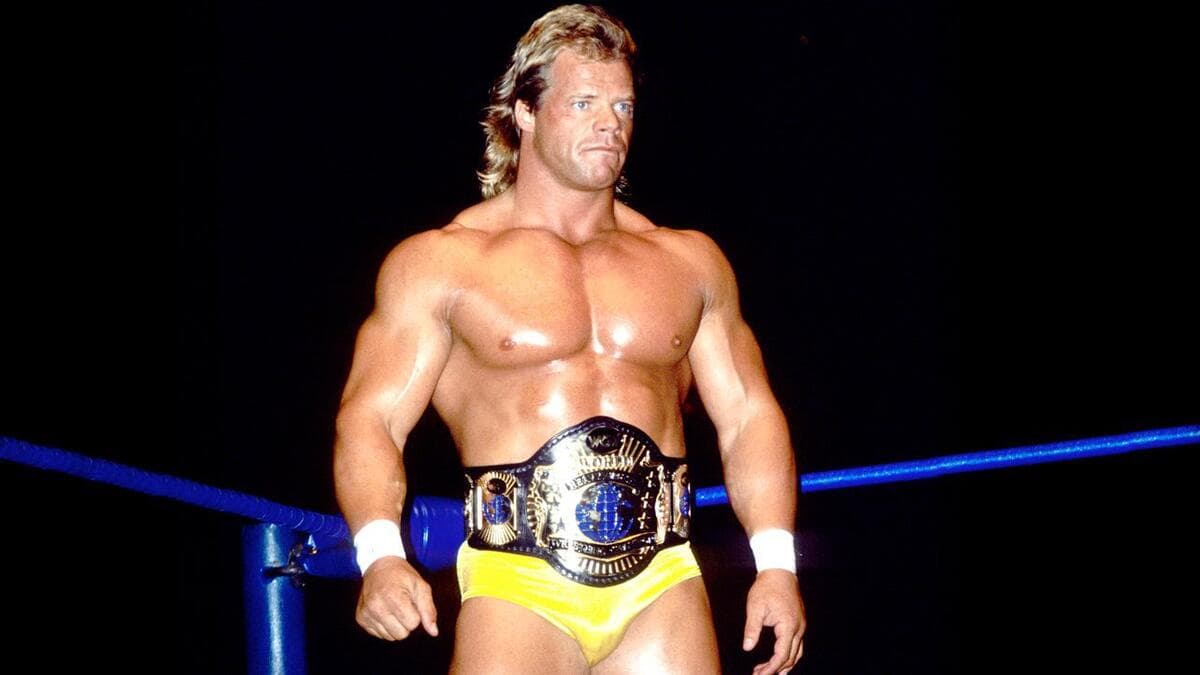
Luger ultimately held the WCW World Heavyweight Championship for 230 days until he dropped the Big Gold Belt to Sting at SuperBrawl II. After doing so, Luger departed WCW and joined Vince McMahon’s ill-conceived World Bodybuilding Federation, co-hosting the group's weekend TV series while preparing for a guest appearance at their June pay-per-view. He never did get his chance to pose, though, as Luger was almost killed in a motorcycle accident shortly before the event.
By the time Luger had healed up, the WBF was dead, so Luger made the logical transition back to pro wrestling in early 1993 and entered WWF as a self-absorbed heel called The Narcissist, complete with a full-length mirror which he used to admire his own musculature before and after matches.
At a time when the WWF had lost the likes of Ric Flair back to WCW, and The Ultimate Warrior and Davey Boy Smith to human growth hormone-related firings, McMahon's entity desperately needed to shore up the star power. Luger wasn't even a year removed from reigning as WCW World Heavyweight Champion, so he was a natural choice to help patch up the thinning upper card.
The Narcissist character didn't last six months, however, as on the Fourth of July 1993, Luger was suddenly turned babyface. In what was a clear attempt to fill the gaping hole left by the all-powerful do-gooder Hulk Hogan, WWF booked Luger to be the new Hulkster, draped in as much Americana as possible.
To spell out this change, Luger was a surprise entrant in a public bodyslam challenge held by the America-hating WWF Champion Yokozuna on board the USS Intrepid. While every proud American contestant before him failed, Luger, bedecked in red, white, and blue, stormed the ring and overturned the 500-plus lb Yoko to win the contest. With this turn, "All-American" Lex Luger got the big push and toured the United States on the Lex Express bus in the run up to SummerSlam 1993.
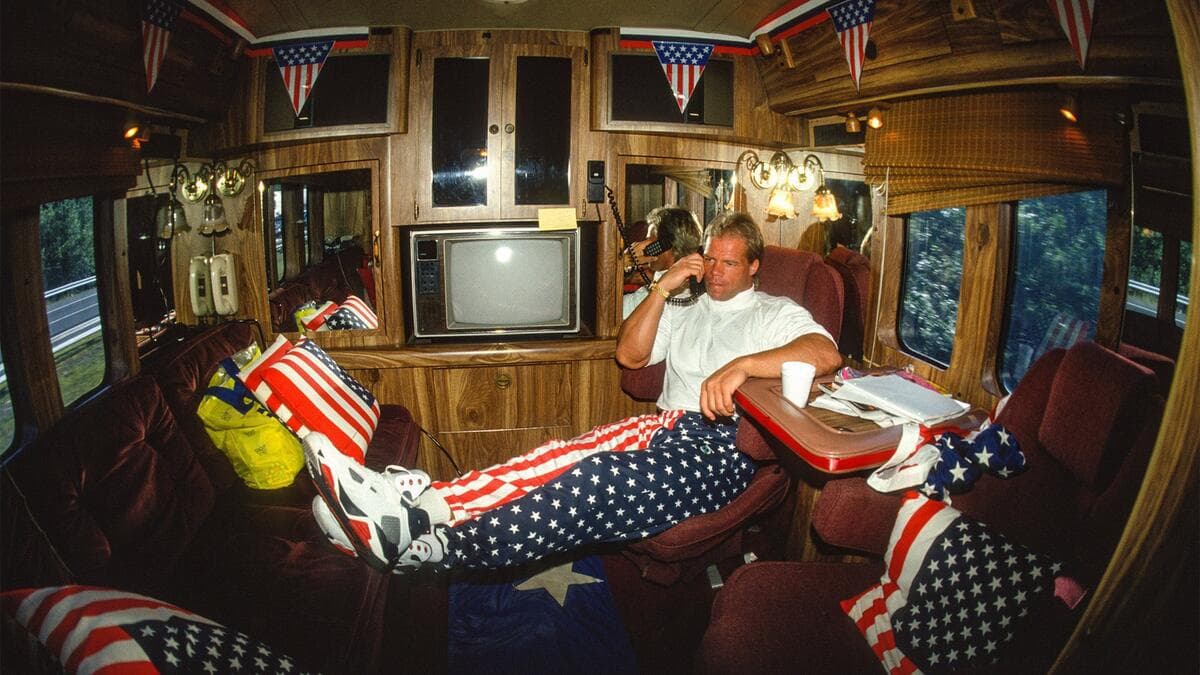
It was patently obvious that WWF were going all in on rocketing Luger to the WWF Championship - until they didn't. Questionable booking and curious alterations saw Luger fall short of the crown, earning a hollow count-out win over Yokozuna at the 1993 SummerSlam. He then failed in a second bid for the gold at WrestleMania X the following year, having co-won the Royal Rumble with Bret Hart. After spending the previous summer making Luger out to be the second coming of Hulkamania, WWF now had Luger configured as a hapless choke artist.
After WrestleMania X, Luger stalled out. For the next year, he meandered in and out of feuds with Crush and Tatanka, far adrift from the main event tier that a player of his assumed prestige presumably belonged on. At the time of Sting's phone call to Bischoff, Luger was part of a promising but ultimately go-nowhere tag team with Davey Boy Smith called The Allied Powers.
Preceding the phone call to Eric Bischoff, Sting chatted with best friend Lex Luger about apparently humdrum matters when Luger casually mentioned that he hadn't been under contract with WWF for around six months. This revelation floored Sting, who couldn't believe that a star of Luger's calibre was on a handshake, per-night deal with somebody like Vince McMahon, who was notorious for making sure his talents were securely tethered to the World Wrestling Federation.
As Luger remembered it, close to a year earlier he kept his contract from automatically rolling over another year because he wanted to renegotiate. He had all intentions of re-signing with WWF, but he was looking for a deal that was friendlier to his career desires like commercial opportunities and a chance to do something bigger in the world of bodybuilding and fitness. For reasons that are not entirely clear, while Luger's attorney went back and forth with the company on the specifics of the deal, it just never got done.
When the old contract lapsed, Luger continued performing for McMahon under the impression that one day there would be a new contract for him to put the ink to. After six months, though, it just hadn't happened. Until that theoretical day came up, Luger was content to continue wrestling for McMahon on a nightly deal, all the while the door behind him was conspicuously unlocked.
Flabbergasted, Sting relayed those details to Eric Bischoff, thinking this would be a great way to once again work with one of his closest friends. Bischoff, however, was conflicted. On the one hand, he knew that an all-too-recent WWF star such as Luger strolling out on a WCW programme could just be the cosmic jostle his show needed. On the other hand, he didn't much care for The Total Package.
Bischoff, who worked with Luger in WCW earlier that decade, later wrote: "Overall, I thought he was an arrogant ass. He treated people badly and had too high an opinion of himself. And I never really thought much of his talent… Between his lack of talent and p*ss-poor attitude, I had no interest in him whatsoever, and I told Sting that."
Sting remained persistent, however, and Bischoff admitted that it was only out of respect for the loyal, face-painted headliner that he even agreed to meet with Luger. When Bischoff arranged the meeting, he demanded secrecy from the man currently situated in WWF.
When the trio came together for this crucial meeting, it was in the garage of Sting's home, and Luger was keen to jump back to WCW by this point. Bischoff was feeling decidedly less warm, however, and issued some demands that might prove hard for Luger to accept. If Luger said no to the non-negotiable ultimatums, Bischoff wasn’t too concerned about not bringing back the former world champion.
First, Luger had to agree to accept an annual salary of $150,000, which was staggeringly less than what Luger was used to earning. Secondly, Luger could not give any sort of notice to Vince McMahon whatsoever. Only Bischoff, Sting, and Luger knew about this plan. If Vince or anyone else found out, that would mean that Lex opened his mouth, and all hope of Bischoff making Luger's debut a surprise would be ruined. As hard a bargain as Bischoff drove, Luger was serious about returning and accepted those terms.
In the weeks ahead, Luger remained a fixture on WWF cards. At house shows, he and Davey Boy Smith lost in tag team matches, mostly to WWF Tag Team Champions Owen Hart and Yokozuna, with the same angle playing out of The British Bulldog walking out on Lex in the later stages of the match. At the time, Smith was being groomed for a heel turn, while Luger was being positioned as his main rival for the months ahead.
After Smith solidified his heel turn on an episode of Raw by double-crossing WWF Champion Diesel, Luger appeared at SummerSlam on August 27 - only eight nights before the Nitro premiere - to help even the score during the main event. It was Luger's final televised appearance for WWF, something very few people knew at the time.
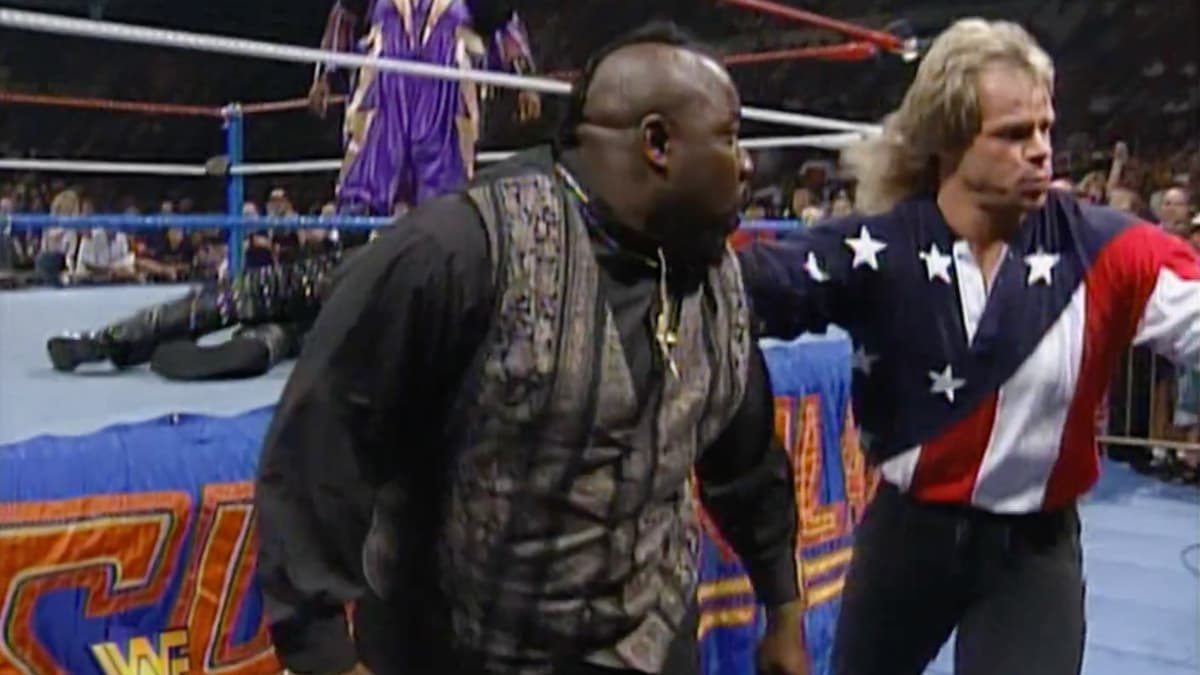
Luger wrestled in untelevised matches at the next two days' worth of TV tapings, before setting out on the Labor Day weekend house show loop in northern New York and eastern Canada. Mostly, Luger filled in for an injured Diesel in tag team bouts alongside Shawn Michaels against Owen Hart and Yokozuna.
On Friday, September 1, however, just three days before the Nitro premiere, Luger reportedly called Sting with some startling news. At some point since the secret meeting in his friend's garage, Luger had received a contract offer from Vince McMahon, though the offer on the table didn’t take care of everything that Luger was unhappy about. Still, Luger was using the opportunity to potentially wrangle a better deal out of World Championship Wrestling.
By Sunday, one day before the Nitro premiere, Bischoff held his ground on the terms he was offering of a take-it-or-leave-it salary and speak not a word of this to anyone. Luger, feeling this was the option that had more upside, reaffirmed to Bischoff that he was joining the promotion.
After the Sunday night WWF show in New Brunswick, the rest of the roster flew home for a few days to relax. Covertly, Luger boarded a Monday morning flight bound for Minneapolis.
Upon arrival, Luger was escorted via van to a hotel separate from the other wrestlers. Once he was brought to the building shortly before going on live, he was taken to an isolated area with a towel draped over his head. To any clueless onlookers, this might have looked like a bizarre kidnapping.
What transpired was Vince McMahon and the pro wrestling world found out what only Lex Luger, Eric Bischoff, Sting, and some tight-lipped crew members already knew – that The Total Package had slipped out from under McMahon's thumb, returning to the closest thing resembling competition to WWF there was.
As Luger strode out in front of the astonished crowd at the Mall of America, silently confronting old rivals Sting and Ric Flair from afar, he became the shot heard around the world in the brand-new Monday Night Wars.
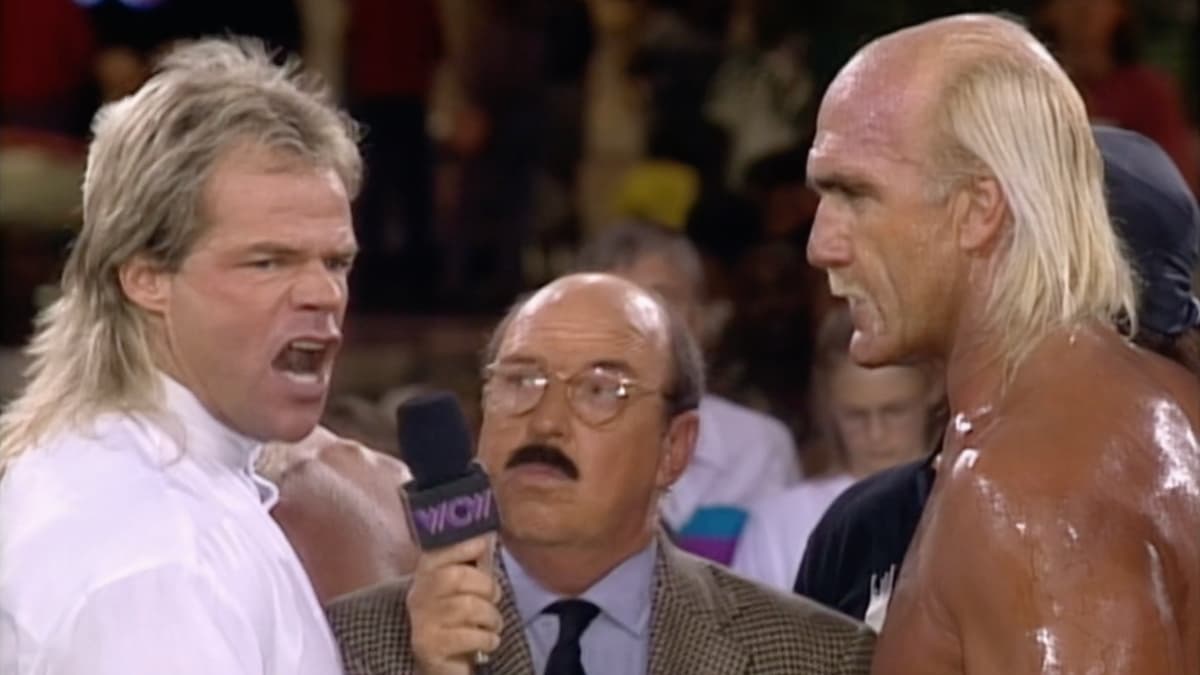
Luger would ultimately remain one of WCW’s top stars until the promotion’s dissolution in 2001, during which he became WCW World Heavyweight Champion once again as a key component of the WCW vs. nWo storyline, while he would later join nWo Wolfpac, among other accolades.