Madusa & The Trash Can: An Iconic Monday Night Wars Moment
The true story of Madusa dumping the WWF Women's Title in a trash can on WCW Nitro

Mar 10, 2026

The true story of Madusa dumping the WWF Women's Title in a trash can on WCW Nitro
Mar 10, 2026
From the moment WCW Monday Nitro premiered on TNT and began going head-to-head with WWF Monday Night Raw, WCW Senior Vice President Eric Bischoff was aggressive towards Vince McMahon and the World Wrestling Federation.
This instantly involved the shock return of Lex Luger on the premiere episode of Nitro, while Bischoff would dismissively read out spoilers for Raw most weeks as he highlighted the alleged staleness of competition.
WCW’s hostility towards WWF would only increase as 1995 continued and at the end of the year, Bischoff authorised for the WWF Women’s Championship to, quite literally, be dumped in the trash can.
By late 1993, nearly five years had passed since the WWF Women's Title had been fought over on WWF programming, but the company suddenly decided to reinstate the belt despite the only established woman on the roster being Luna Vachon, who at this point was seconding Bam Bam Bigelow to the ring.
Fortunately, there was a credible star on the market, one that checked all the boxes necessary to be the face of any women's division in Madusa. The two-time IWA and AWA Women's champion was no stranger to wrestling fans, though her highest-profile work in the preceding years came mostly as a non-wrestler as a valet of sorts to Rick Rude and Paul E. Dangerously's Dangerous Alliance in WCW.
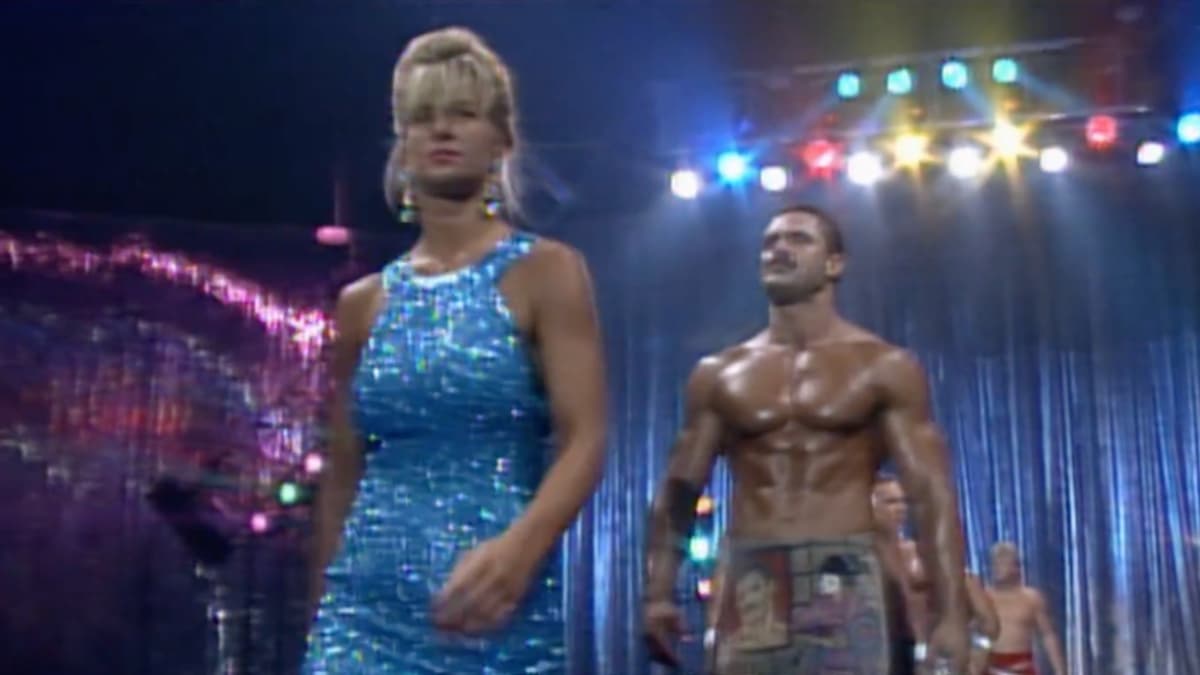
As 1993 drew to a close, Madusa signed with the World Wrestling Federation and was dubbed Alundra Blayze. She was placed in a curiously-designed six woman tournament to crown a new WWF Women's Champion, the majority of which didn't air on television, and was mostly confined to dark matches. Just as odd, Blayze's semi-final victory over Allison Royal took place not at a WWF taping, but at a USWA card in Memphis.
The final of the tournament pitted Blayze against Heidi Lee Morgan at a Raw taping in December 1993, though the match didn’t air on WWF’s flagship programme. Instead, for unclear reasons, the all-important final aired on the increasingly-irrelevant All American Wrestling program on a Sunday morning, 13 days after it was filmed, and fans who tuned in saw Blayze pin Morgan with a bridging German suplex to become the new WWF Women’s Champion.
For the two years that followed, Blayze remained the undisputed face of the WWF's women's division, but the company weren’t exactly pushing the division. It took seven months for Blayze to wrestle a match on Monday Night Raw and, out of the 100-plus matches the former Madusa had for WWF in 1994, only six were televised and just two of them took place on pay-per-view. Then, when Blayze lost the belt just three weeks short of a one-year reign as champion to Bull Nakano, it was at an All Japan Women’s Wrestling show inside the Tokyo Dome.
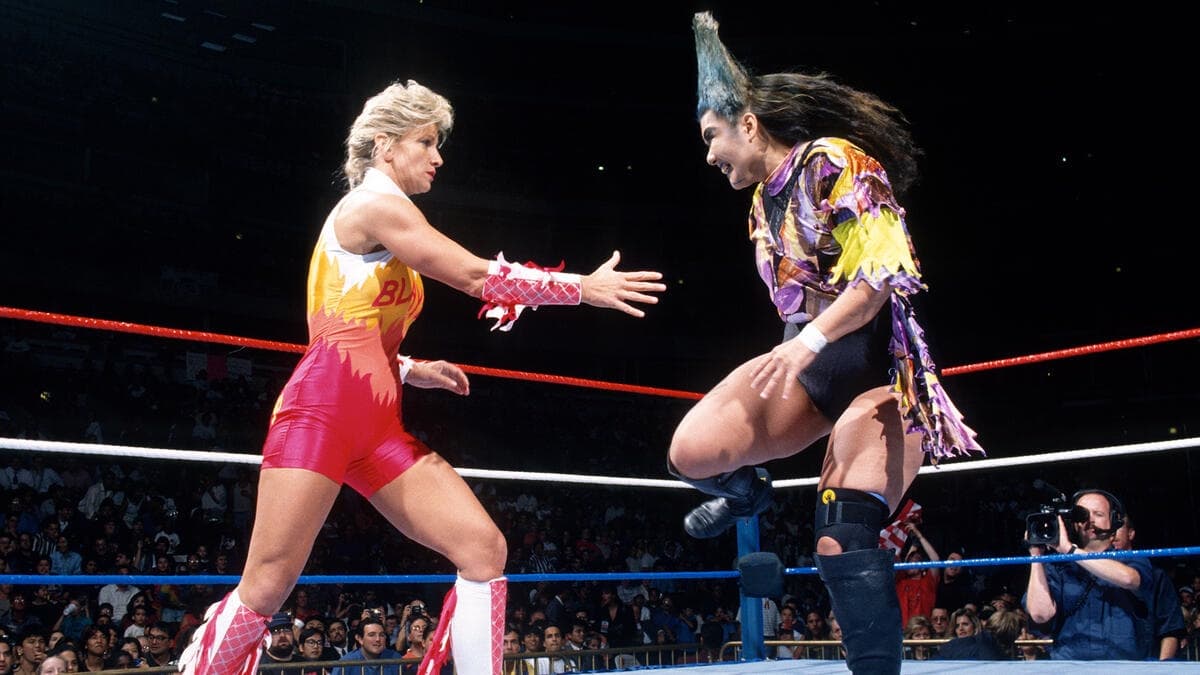
For the latter half of 1994 and the first third of 1995, the women's scene was strictly Blayze and Nakano facing off on house shows, save for their few TV bouts against each other. Come 1995, Nakano dropped the title back to Blayze before leaving the company. Replacing her as Blayze's exclusive opponent was veteran powerhouse Rhonda Singh, who made her reputation worldwide as an unyielding villain under the name Monster Ripper, but Singh was repackaged as a trailer park princess by the name of Bertha Faye, with extra comedic attention being placed on her garish attire and stockier build. Reportedly, Singh was also asked not to perform the same power moves as her male counterparts, forcing her to rely more on the one-note caricaturing in her matches.
Despite the hindrances to Faye as a character and performer, she still won Blayze's title at the 1995 SummerSlam. Faye didn't reign for too long, though, as Blayze regained the belt on an episode of Raw two months later. With the win, Alundra Blayze was now a three-time WWF Women's Champion, having cleanly avenged her first two losses.
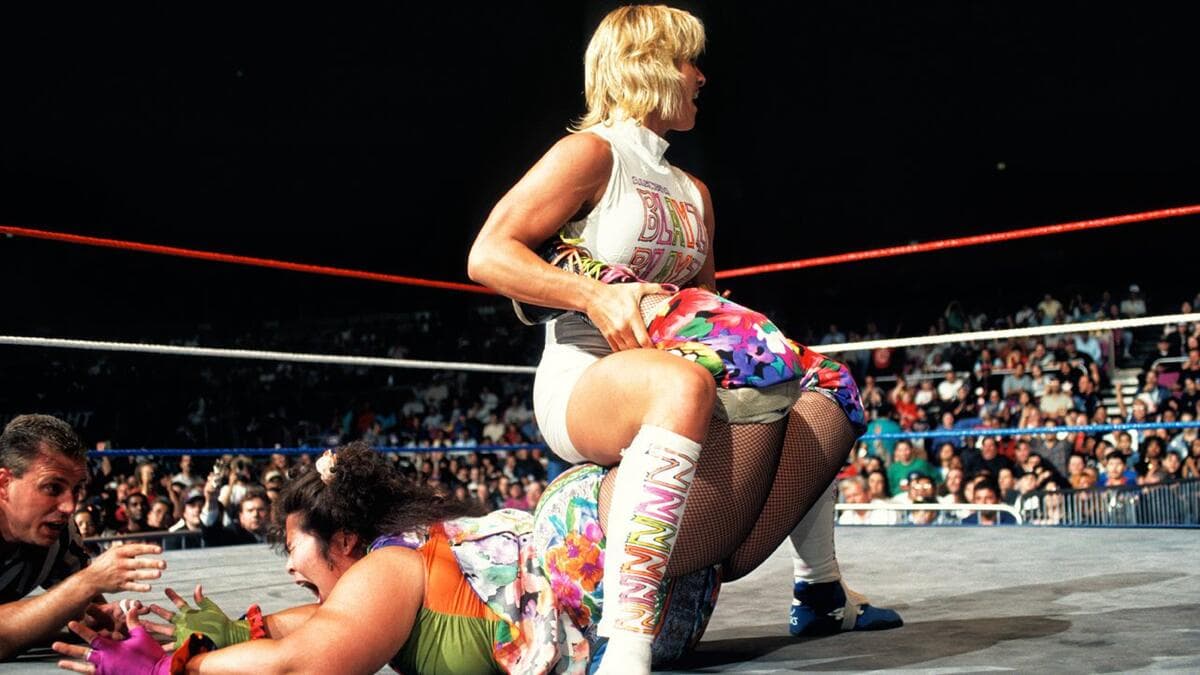
To set up Blayze with new challengers, a plan was in place for 1996. The idea was to send Blayze to wrestle for All Japan Women as a regular talent, while bringing her and some fresh opponents back sporadically to work major WWF pay-per-views, thus keeping the ailing women's scene on life support for the time being.
To establish Blayze's next rival, an eight-woman elimination match was put together for the 1995 Survivor Series, with Blayze and Faye each captaining a team. Their partners all came from All Japan Women, as Blayze teamed with Chaparita Asari, Kyoko Inoue and Sakie Hasegawa to face Faye and teammates Lioness Asuka, Tomoko Watanabe, and Aja Kong.
Alundra Blayze and Aja Kong already had a history dating back to their brutal street fight in the summer of 1990, and Kong fit WWE’s mould of a monster heel for the valiant babyface to overcome. WWF decided to go in this direction too as Kong survived the eight-woman match during the 10-minute sprint, with Kong scoring every elimination for the heel team. Blayze managed to fight back from a three against one disadvantage by eliminating Faye and Watanabe, before she ultimately fell victim to Kong’s power.
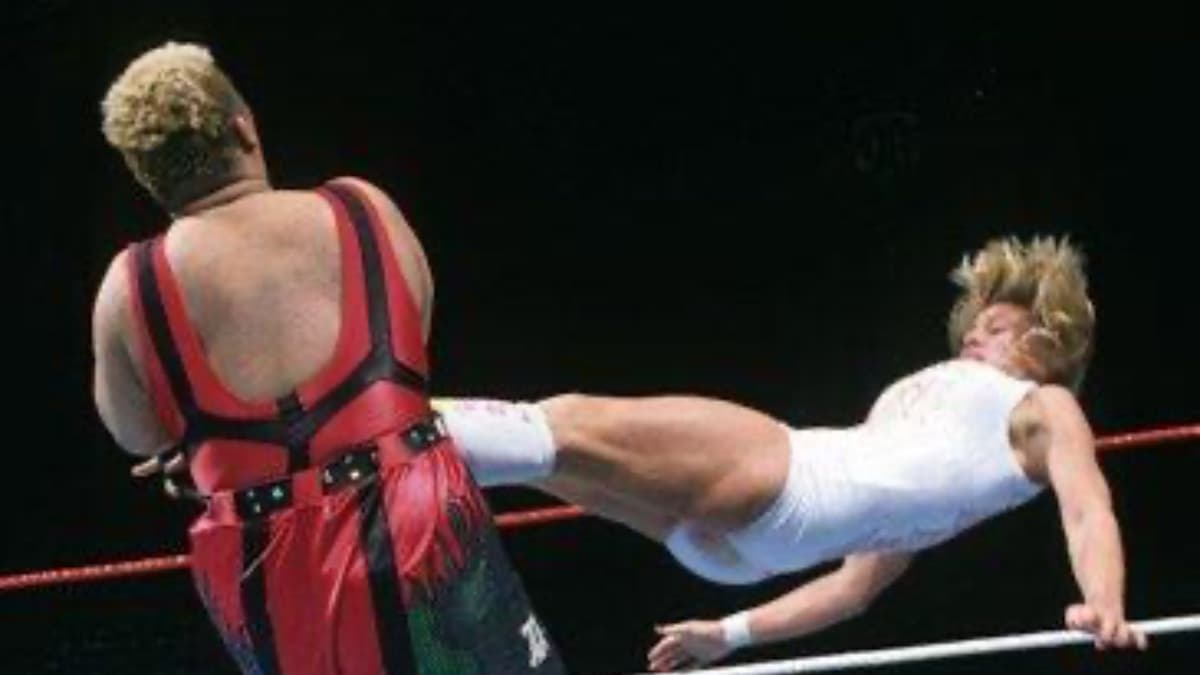
The plan was for Alundra Blayze to defend the WWF Women’s Championship against Aja Kong at Royal Rumble 1996. The match was further set up at the post-Survivor Series 1995 tapings of Monday Night Raw in a tag team match which saw Kong and Watanabe team together to defeat Blayze and Kyoko Inoue, while Kong also defeated Chaparita Asari in singles action which aired on December 11.
The Alundra Blayze vs. AJA Kong title match wouldn’t take place in the World Wrestling Federation, however. On December 13, 1995, Blayze’s WWF contract expired and was not renewed, with Blayze noting she received a FedEx from the company which confirmed her services were no longer needed.
Around the time that Blayze's deal lapsed, JJ Dillon - Vince McMahon's right-hand man in talent relations at the time - notified All Japan Women that the Blayze/Kong title match for the Rumble was cancelled. It would be nearly three years before the WWF Women's Title appeared once more on company programming, but it took far less time for the belt to show up in a rival promotion.
The now former Alundra Blayze still had the WWF Women's Title in her possession, and what happened next is the subject of much dispute as the parties involved remember it a little differently.
According to Madusa, she received a call from longtime friend Eric Bischoff, who asked if she still had the belt, although Bischoff has claimed it was the opposite and Madusa called him, asking if there was a place for her in WCW.
What isn't in dispute, though, is that Bischoff knew he could shake things up if he could get the WWF Women's Title onto Monday Nitro. More than three months had passed since free agent Lex Luger shocked the world by strolling out on Nitro's maiden broadcast, and in the competitive Monday Night Wars, Bischoff wasn't done trying to harm the opposition.
Madusa brought the title belt to the December 18 episode of Nitro in Augusta, Georgia but, according to Bischoff, he hadn’t yet decided what to do with the title. The idea was soon pitched, though, for Madusa to walk up to the commentary stage, hold the WWF Women's Title aloft, and then deposit the belt into a waste basket.
In his book, Controversy Creates Cash, Bischoff wrote about the predicament Madusa was in, saying, "She was pretty reluctant to do it; quite frankly, I talked her into it. I'm sure to this day she wishes I hadn't."
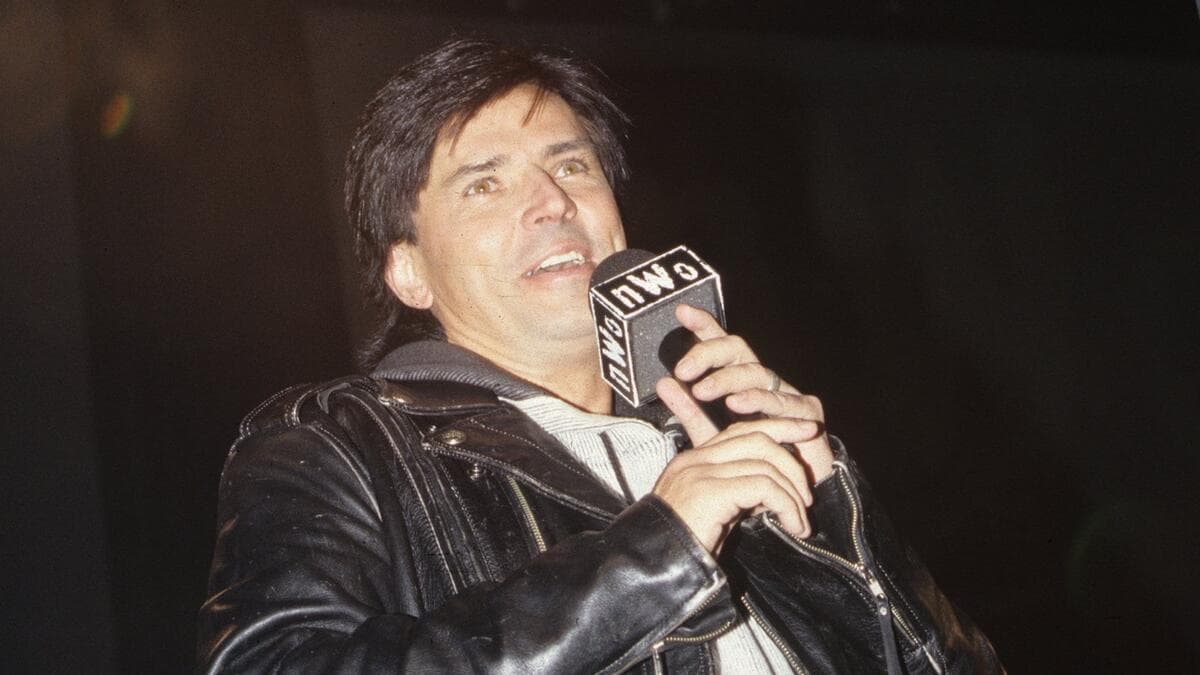
In a 2009 interview with the Miami Herald, Madusa claimed she was given no choice since she was now under WCW contract, saying, "Eric Bischoff told me that I had to put the WWF Women's Title in the trash can on television or that was it...If I was asked how I felt, and if I would have done it by my own choice, the answer would've been, 'No.'"
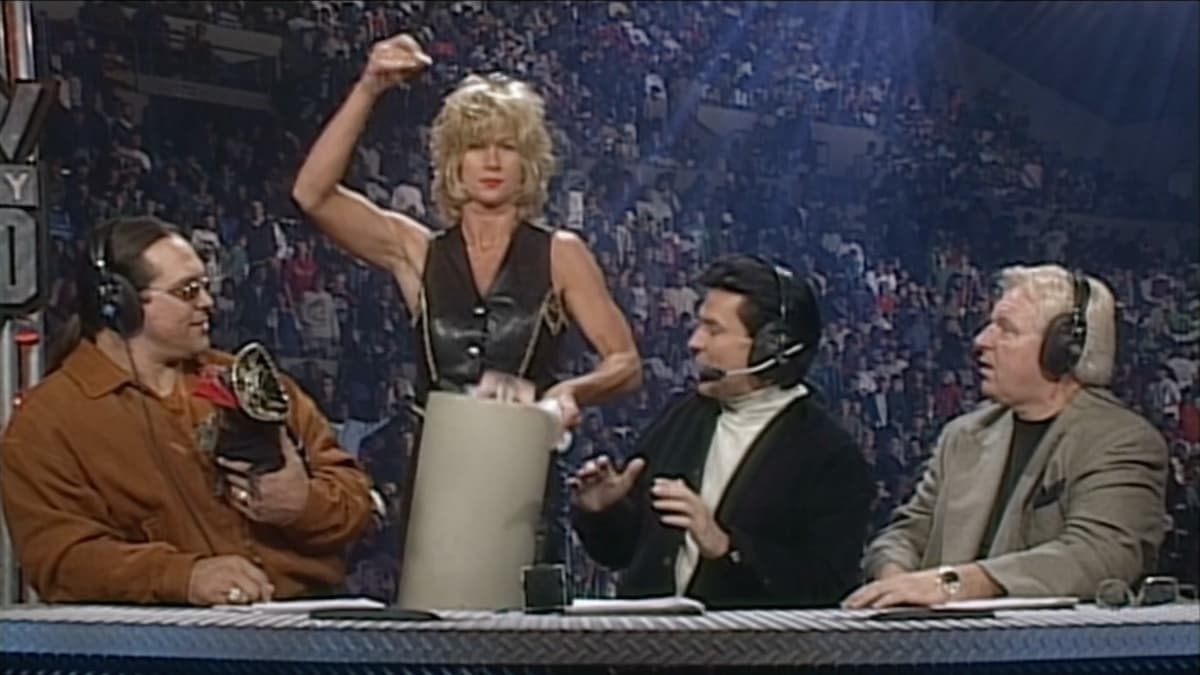
At 9 pm ET, Nitro aired lived from Augusta while Raw kicked off its post-In Your House broadcast from Newark, Delaware. Less than 90 seconds into Nitro, just as Bischoff and fellow announcers Bobby Heenan and Steve McMichael previewed a WCW World Heavyweight Title match between Randy Savage and The Giant, a leather-clad Madusa crashed the stage, introducing herself by that name and announcing she always had been Madusa, and always would be.
Then, from behind McMichael's broad shoulder, she produced the pink-strapped WWF Women's Title, which drew shocked responses, a knowing one from Bischoff who could barely hide a smirk, and legitimate astonishment from Heenan.
Without wasting a moment, Madusa picked up a nearby waste basket, held it up, and let the belt plunge right into it. She then said: "That's what I think of the WWF Women's Championship belt. They used to call me Alundra Blayze, but not anymore. This is where the big boys play, and now, this is where the big girls play."
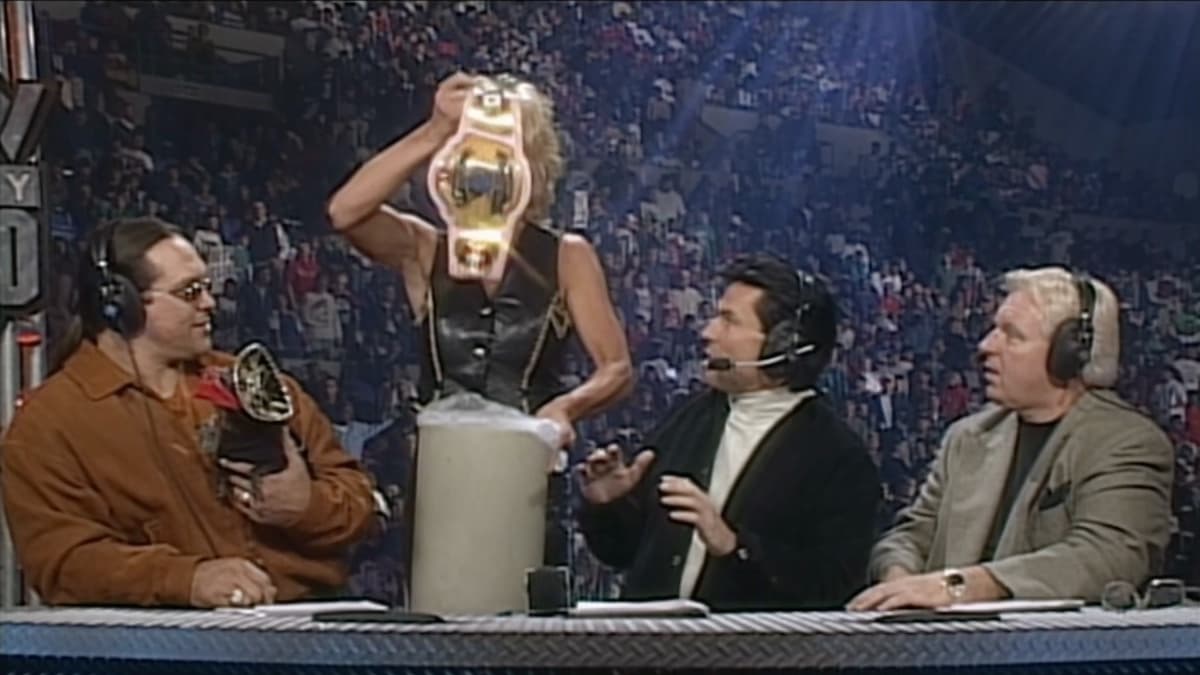
Heenan sat speechless and slack-jawed, while McMichael crowed about the distress certain people in Connecticut must have been feeling. This tension was soon felt in Delaware, with Dave Meltzer noting in the Wrestling Observer Newsletter that Vince McMahon, sitting at the announce table while Raw was on the air, learnt about Madusa’s stunt from one of his technicians. This ultimately contributed to McMahon appearing somewhat distracted throughout the broadcast.
As a result of the championship binning, WWF initiated legal action, as bringing the WWF Women's Title onto WCW Nitro violated intellectual property trademarks, with the legal fallout from the Ric Flair/Big Gold Belt saga from four years earlier establishing the precedent that championships were the intellectual property of the parent organisation.
For the non-legal fallout, WCW reportedly instituted a policy the following month stating that all titleholders had to leave their belts with the company following TV tapings, likely out of fear of WWF somehow retaliating.
The Madusa/trash can moment has been played over and over again in the decades since the incident, notably in the heralded "Lonely Road of Faith" music video, but ultimately, outside of giving Bischoff another chance to slap the competition, it didn't really mean a whole lot.
The WWF Women’s Title and the women’s division was anything but an integral part of the company’s televised product. Alundra Blayze and her rivalries were treated more as a novelty than as a regular part of the show. Madusa throwing the belt away worked well as a cathartic response to the subpar usage of her in those two years, but not so much as her putting a period at the end of the division's sentence. The WWF had already punctuated that sentence themselves.
Although a performer once again in WCW, Madusa didn't immediately benefit from the incident either. She wouldn't appear on camera again until over a month after the trashing, attacking Sensational Sherri at her comedically-disastrous wedding with Colonel Robert Parker.
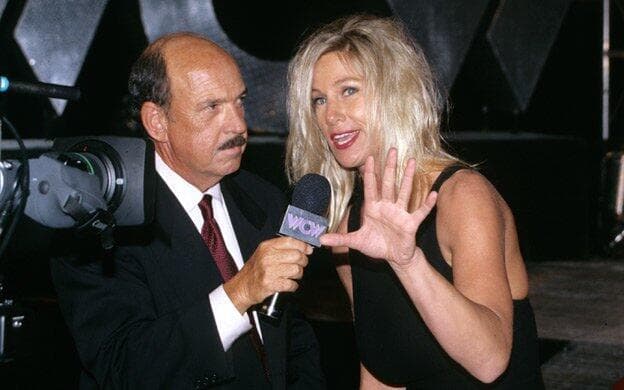
Throughout 1996, Madusa wrestled sporadically for WCW, in an inter-gender feud with Parker, while also battling women such as Sherri, Malia Hosaka, and old rival Bull Nakano. She lost to Akira Hokuto in the tournament final to crown the first ever WCW Women's Champion, whom she eventually lost a title vs. career match to in 1997.
Madusa then left wrestling for the better part of two years, before returning in 1999 as part of Randy Savage's entourage. She last wrestled at Fall Brawl 2000, and had been long gone from TV by the time Vince McMahon and WWF acquired WCW's assets in the March 2001 sale.
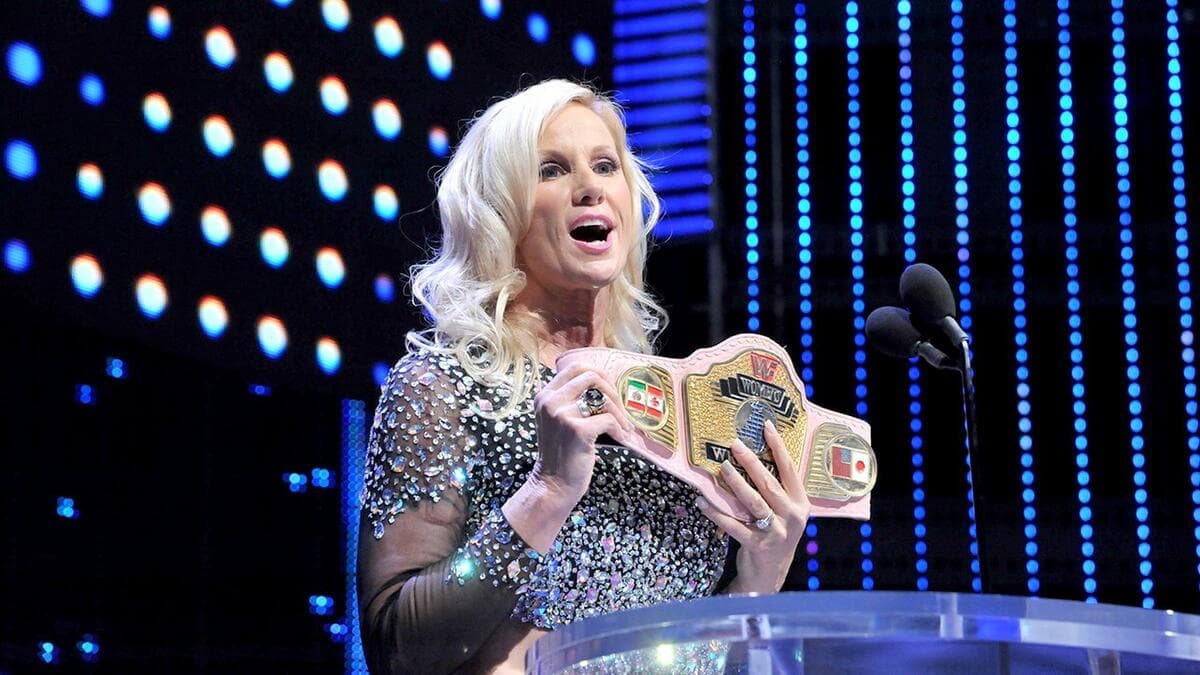
Though there didn't seem to be a clear path to reconciliation, Madusa found herself getting the call for a WWE Hall of Fame induction in 2015, albeit under her Alundra Blayze name. There, she completed the reversal of her prior act by symbolically removing the WWF Women's Title belt from a trash can on stage and declaring the championship was back home, where it belonged.
Legal wrangling over intellectual property aside, the belt trashing in December 1995 was simply one shot in a series of shots between two warring promotions. It really was emblematic of the spirit of the long-passed Monday Night Wars - two sides firing shots as they jockeyed for supremacy while stooping to whatever means to debase the enemy.
Few shots, of course, ever precisely equaled the rare visual of a former WWF star desecrating one of her ex-boss' props on a rival program. Understandably, that particular shot's a little more memorable than most, a curious portrait of a shocking moment in time.