Syxx To X-Pac: Sean Waltman's WWE Return From WCW
Everything you need to know about Sean Waltman jumping ship from WCW to WWE at the height of the Monday Night Wars

Mar 9, 2026

Everything you need to know about Sean Waltman jumping ship from WCW to WWE at the height of the Monday Night Wars
Mar 9, 2026
In the mid-1990s, The Kliq of Diesel, Razor Ramon, Shawn Michaels, Hunter Hearst Helmsley, and The 1-2-3 Kid became one of the most powerful backstage factions in pro wrestling, regularly influencing Vince McMahon’s booking of the World Wrestling Federation. That power drastically loosened in 1996, however, after three of the five Kliq members jumped ship to World Championship Wrestling as Diesel, Razor Ramon, and The 1-2-3 Kid became Kevin Nash, Scott Hall, and Syxx.
Less than two years later, however, at a time when WWF began closing the gap on their competitor, controversial circumstances led to one of those three men exiting WCW, and they quickly found themselves back in what would become WWE.
30 years ago, Sean Waltman was an indispensable commodity for those in the tape trading world. A daredevil that took to the sky with regularity, Waltman cultivated a wider following while wrestling as The Lightning Kid through matches with the likes of Jerry Lynn and Sabu. This attracted the attention of WWF and they came calling in the spring of 1993 as the company transitioned to the New Generation era.
Sean Waltman was just the right build for WWF’s plans for him. Initially cast as a gutsy prelim wrestler with no hope of conquering his larger foes, Waltman lost a few matches on Monday Night Raw before stunning Razor Ramon in the veritable upset of the year. It was one of Raw's early watershed moments, a genuine shock to anyone watching as Waltman caught a dazed Ramon with a ceiling-scraping moonsault to earn the stunning 1-2-3. That victory kicked off Waltman's new in-ring name of The 1-2-3 Kid.
Over the next three years, Waltman enthralled crowds with frenetic movement, fearless risks, and cringe-inducing bumps. Matches with Bret Hart, Owen Hart, Hakushi, and his fellow Kliq members rank among the stronger bouts of the New Generation era.
Behind the scenes, Waltman fell in with members of The Kliq, but by all accounts got along with virtually everybody on the roster, regardless of their political allegiance. Around the time both Hall and Nash finished up with the WWF, Waltman followed them out the door, albeit with far less fanfare. As The Outsiders landed on the doorstep of WCW, Waltman bided his time before he'd join them in their crusade.
That September, Waltman debuted in WCW as the latest member of the New World Order, under the name Syxx. While some believe this was because he was the sixth member of the nWo, Waltman was actually the seventh member of the group, following both Outsiders, Hollywood Hogan, Ted DiBiase, The Giant, and nWo Sting, and the name Syxx actually derives from the sum of the three numbers in 1-2-3 Kid.
Syxx was prolific as part of The nWo. He unsuccessfully challenged Eddy Guerrero in a United States Title Ladder Match at nWo Souled Out, before dethroning Cruiserweight Champion Dean Malenko at SuperBrawl the following month. Later in 1997, Syxx sort of became the co-holder of the WCW World Tag Team Titles held by The Outsiders as a stand-in for Kevin Nash while Big Sexy was out of action with injury.
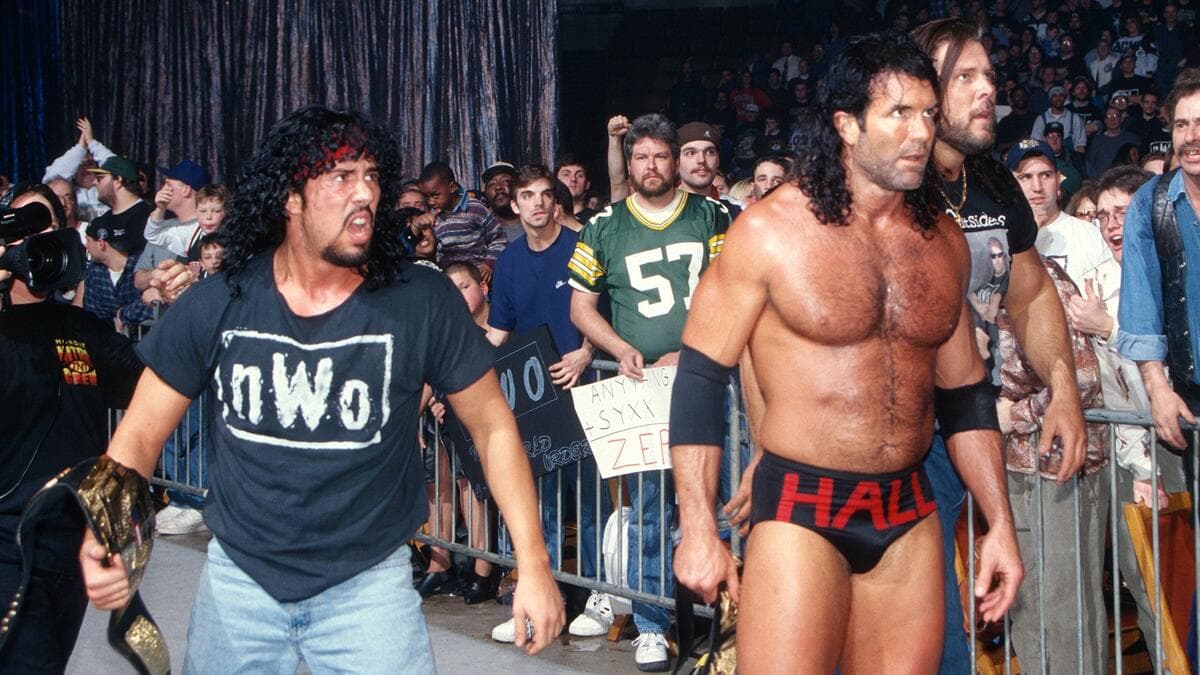
Syxx was also victorious in a WarGames Match over the Four Horsemen as part of an nWo squad captained by Nash.
This close connection with Kevin Nash and Scott Hall both on-screen and behind the scenes resulted in Sean Waltman becoming collateral damage in a political battle he didn’t even know he was fighting.
By the summer of 1997, WCW Senior Vice President Eric Bischoff was already displeased with Waltman for using coarse language during a recent TV match, but he became even more annoyed with the wrestler on the night of the July 28 episode of Monday Nitro. While running interference during a match pitting nWo allies Buff Bagwell and Scott Norton against Ric Flair and Curt Hennig, Syxx yanked down the back of Flair's trunks and the partial moon infuriated Bischoff, who fired Waltman for the act. Waltman was then immediately rehired when Diamond Dallas Page reminded Bischoff that he had a match with Syxx later on in the night.
Waltman would continue appearing on WCW programming but in mid-October 1997, Waltman sustained a serious neck injury during a house show match with Lex Luger in Duluth, Minnesota. Waltman reportedly suffered fractured vertebrae but he would wrestle two more matches following the match, which included dropping Nash’s half of the WCW World Tag Team Titles to the Steiner Brothers on the October 13, 1997 episode of Nitro.
Waltman underwent neck surgery in November 1997 and was expected to be on the shelf for some time. Little did anyone know, though, but he had already made his final appearance in WCW. On Monday, March 9, 1998, while continuing to rehab from neck surgery at home, Sean Waltman was fired by World Championship Wrestling.
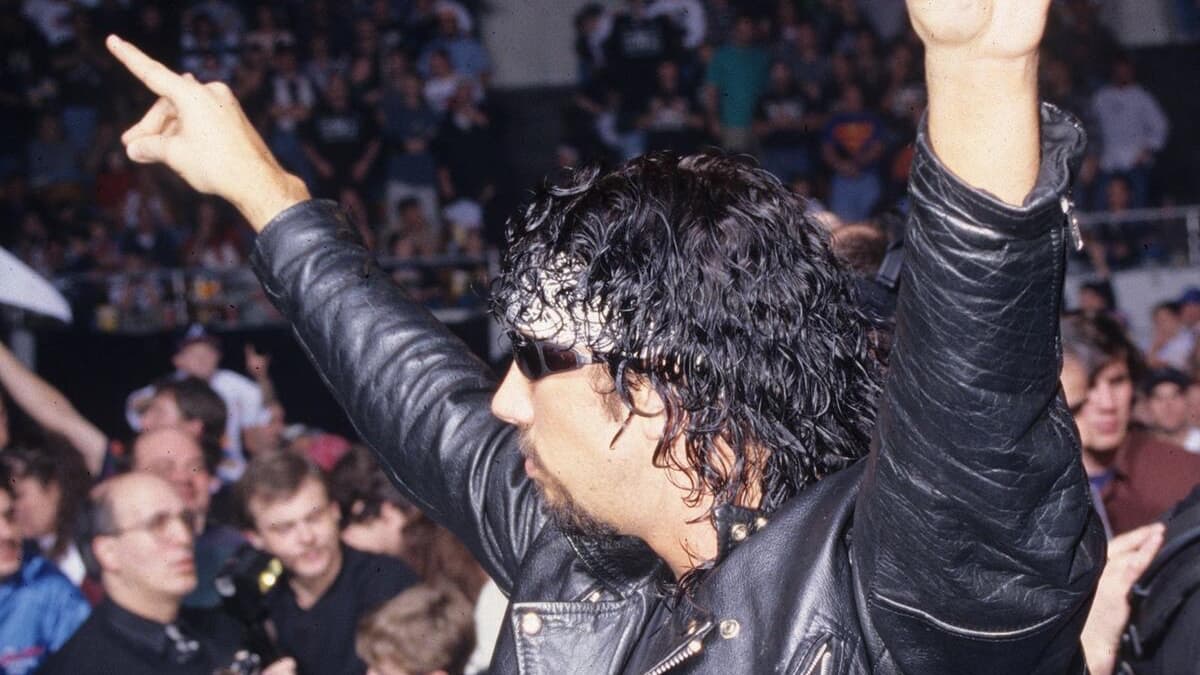
Many felt that Waltman's firing was a warning shot to both Hall and Nash, to put both men in their place. Both Outsiders treaded deep on the political minefield that was World Championship Wrestling, and with other alpha headliners (particularly Hollywood Hogan) vying for whatever control they could obtain, some wondered if Waltman's firing was a shot across the bow of Syxx's Kliq buddies.
As late as 2016, Waltman himself considered the possible Hall and Nash angle to his firing. While speaking one on one with Eric Bischoff during a podcast appearance, Waltman mentioned as such to the man who made the decision to cut him loose.
Bischoff denied that this was entirely the case, saying that as far as sending a message to the Outsiders, "If I wanted to do something to them, I would have done it to them."
While Bischoff and The Outsiders were indeed going through contentious times behind the scenes, Bischoff has insisted that the main impetus for Waltman being shown the door was another powerful figure in super agent Barry Bloom, who presented Waltman at the time.
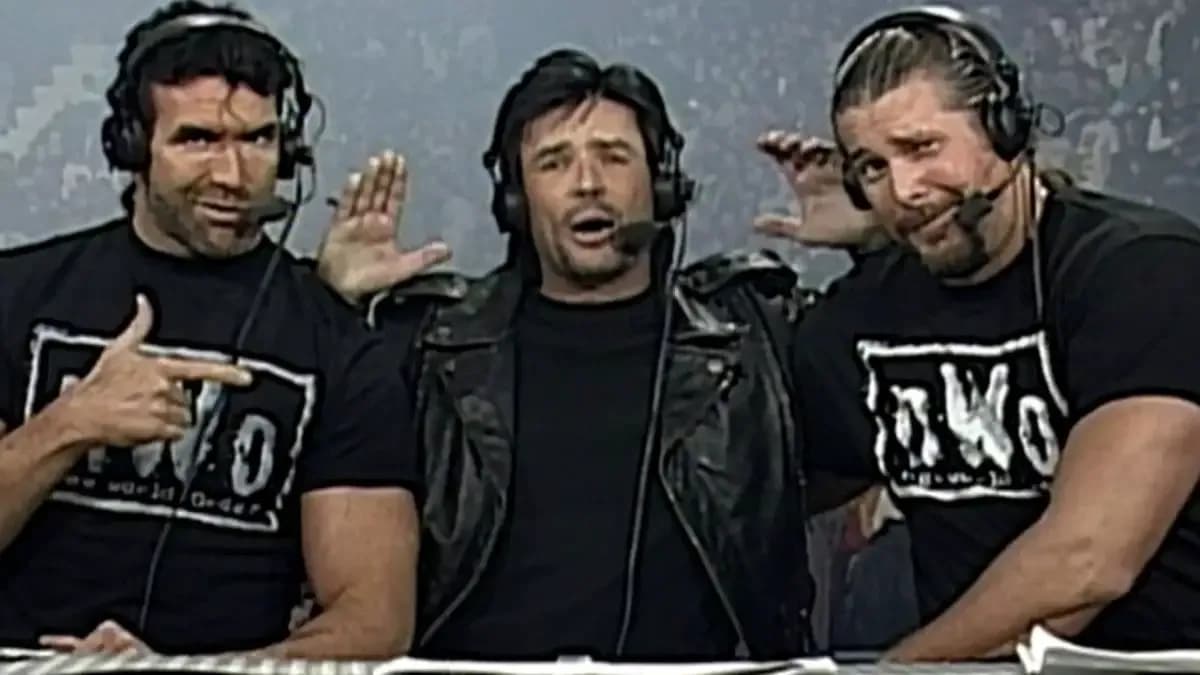
One person who was not a fan of Bloom's was Eric Bischoff. As Bischoff remembers it, somewhere around the turn of 1998, Waltman and WCW had agreed to terms on a new deal. While the precise terms of that deal aren't known, with Hall and Nash locked down with WCW into 2001, it seemed as though their kid brother was going to be with them for the long haul.
According to Bischoff, WCW had already begun paying Waltman under those new contractual terms. Then a couple months into 1998, Bischoff says he was informed by Diana Myers, a representative in the WCW legal department, that Waltman had not actually signed the contract as of yet.
Bischoff then claimed he reached out to Bloom to get the deal properly taken care of. At this point, Bischoff claims, Bloom attempted to re-negotiate the value of Waltman's deal, after Waltman had already started getting paid under the recently agreed-upon terms.
As Bischoff claimed in a 2009 interview with Wade Keller of Pro Wrestling Torch: "Sean and I had an agreement, we reached an agreement, we had papered that agreement, we had been operating under that agreement for a substantial period of time where we were waiting to execute it; it's a normal process, or it was at that time. And then Barry Bloom decided at the last minute to try to up the ante and threatened to walk out and have Sean walk out."
Bischoff called this "a sleazy way to conduct business", though there would be much scrutiny over the move he made next.
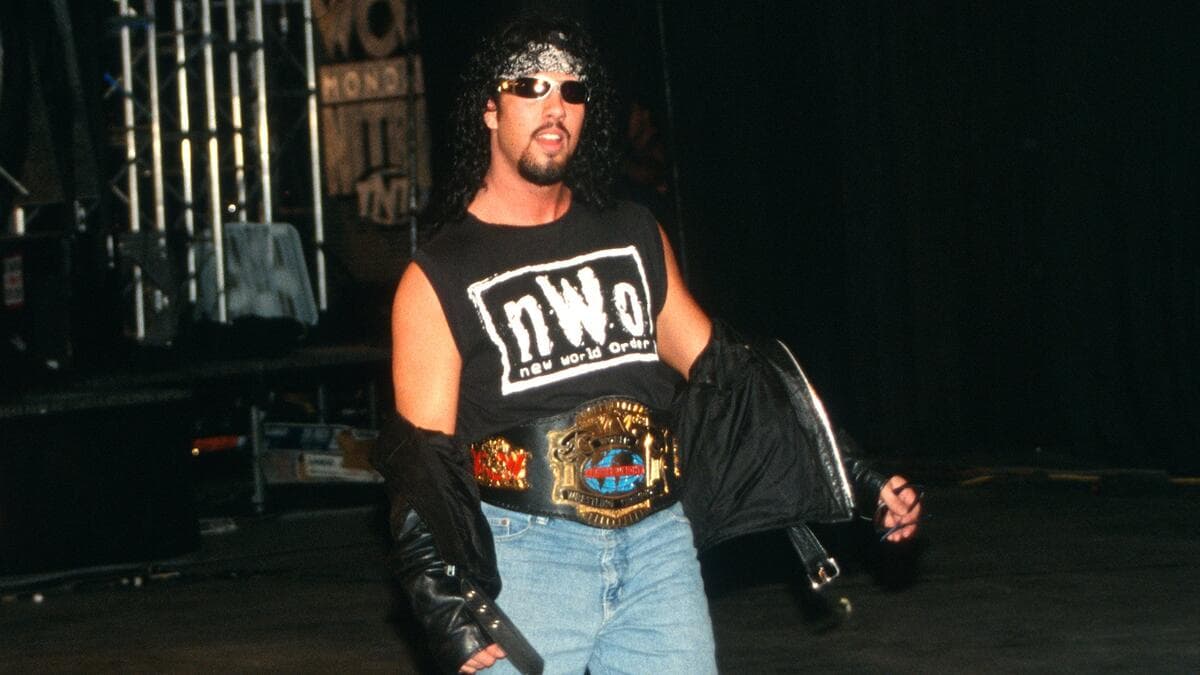
On March 9, while sitting at home, Waltman received his termination notice via FedEx. A courier dropped a package at his house that informed Syxx that his services were no longer required by WCW.
Understandably, Waltman wasn't happy with being fired, but certainly he wasn't the only one upset. Before that evening's Nitro in Winston-Salem, North Carolina, Hall and Nash reportedly confronted Bischoff over his decision to fire their friend. Both The Wrestling Observer Newsletter and Guy Evans' book Nitro claim that Bischoff told Nash that he would fix the situation.
Nothing had changed by the Thunder taping in Baton Rouge three nights later, and this led to The Outsiders putting more heat on the boss. Per Waltman, Hall and Nash did this by trapping Bischoff in a broom closet at the arena.
In the midst of the backstage heated row, Nash reportedly demanded his release from the company. In The Death of WCW, it was claimed that Hall and Nash both tried to quit the company, only to be reminded by Bischoff that they couldn't appear elsewhere until their deals lapsed in 2001.
On the March 16 Nitro in Panama City, Hall and Nash showed up, as Evans' Nitro describes it, "...halfway into an all-day drinking session", and made remarks in their show promo that night, including Hall mockingly letting on-screen rival The Giant know, over the mic, when his cue was to do his run-in on them.
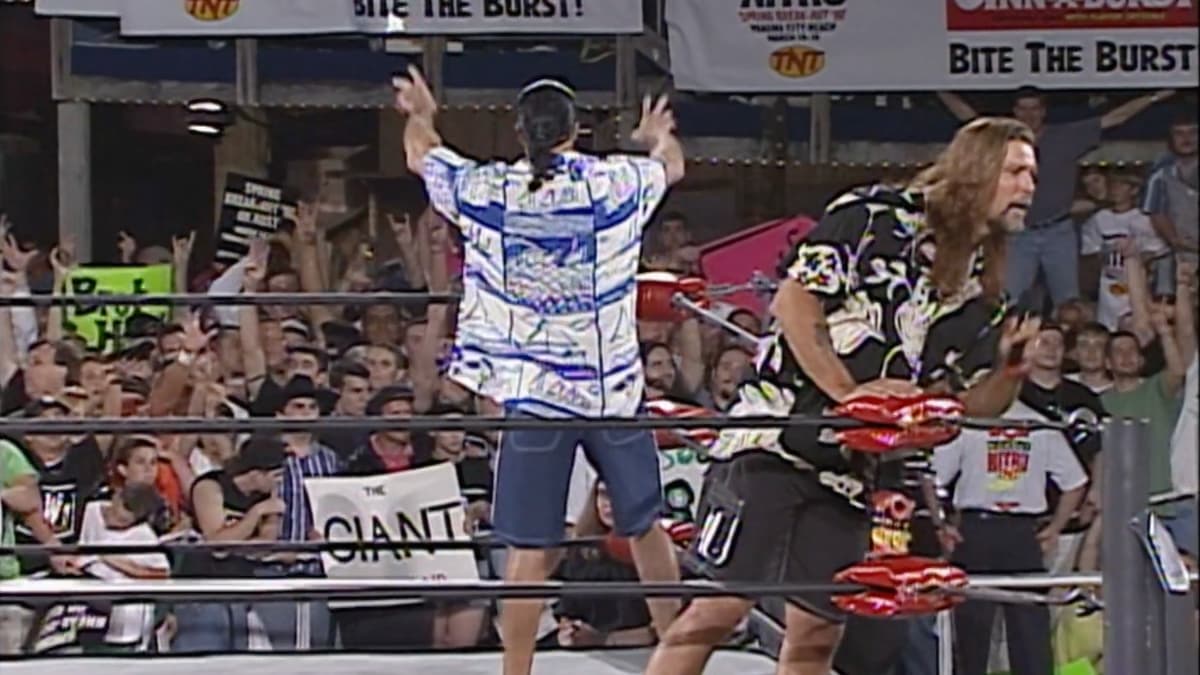
To pacify Nash, WCW managed to put together a program between he and Hogan, which led to the rift that split the nWo into two factions. Waltman's firing was worked into the angle when Nash asked Hogan on the March 26 Thunder why Syxx no longer had a job. Hollywood responded by saying that Syxx just couldn't hang.
This was because Waltman by now had agreed to return to WWF. The Wrestling Observer Newsletter claimed that Waltman's deal included a downside of $300,000 to $350,000 a year, an increase from the $250,000 he was reportedly earning in WCW.
During the several week lurch post-firing, there seemed to be an expectation that, because of the heat and backstage acrimony, Waltman might be brought back to WCW. Waltman instead turned up on Raw is War on March 30, the night after WrestleMania 14.
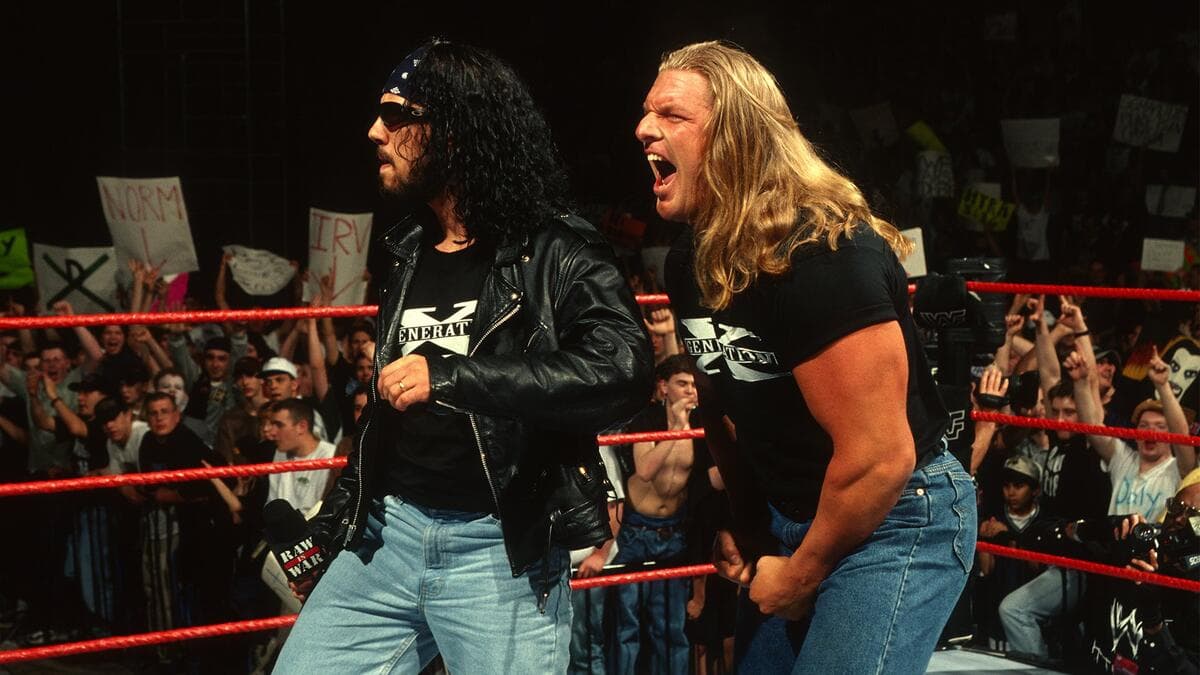
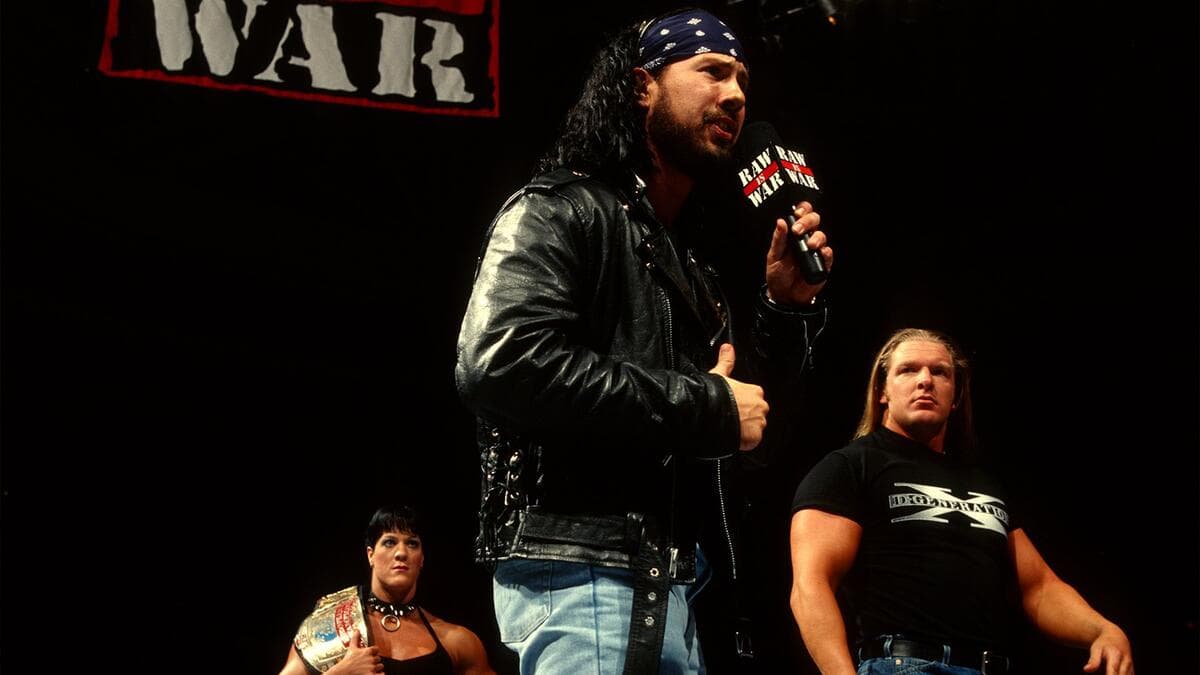
With Shawn Michaels shelved indefinitely after WrestleMania due to his extensive back injuries, Triple H seized control of D-Generation X. After Helmsley verbally wrote off Michaels, he reintroduced Waltman without formally naming him. The Albany crowd recognised the wild-maned, sunglasses-wearing junior heavyweight as he emerged from beneath the Titantron, while Jim Ross plainly declared, "Well look who's back."
With the microphone in hand, Waltman got to work shooting on his former employer. He told Hogan off for his comments on Thunder, and said Bischoff had his head up Hogan's ass. When talking about the remodeling of DX, Waltman made allusions to The Outsiders legitimately wanting out of WCW, adding, "Kevin Nash and Scott Hall would be standing right here with us if they weren't being held hostage by World Championship Wrestling, and that's a fact, Eric Bischoff!"
Bischoff soon went on the defensive. In an internet chat the day after, Bischoff said, in part, that he only brought Waltman to WCW as a courtesy to Hall and Nash to make them happy and keep them from becoming a headache behind the scenes.
He then added: "Because of what I consider to be negative and disruptive behavior on their part, it was clear to me that there was nothing I could do to create a positive environment for them ... it no longer made sense to carry one of their friends under contract."
While the story of Bloom's alleged contractual hold-up later became the front page of why Waltman was let go, in 1998, Bischoff was quicker to discuss his issues with The Outsiders, and how they related to Waltman's firing.
It is likely that all of the above played a part in Bischoff deciding to fire Sean Waltman. Bischoff was unhappy with multiple people close to Waltman, as well as Waltman himself, and the neighbouring situations grew toxic enough to where the WCW SVP made a scorched earth decision.
Waltman’s return ended up being symbolic, though. For the preceding few years, several notable WWF talents moved over to WCW, causing shockwaves. When Hogan and Randy Savage jumped ship in 1994, the promotional war may not have been as explicit, but these were industrial giants bringing name value to the long-running second place promotion.
In a Nitro world, the defection of Luger, the return of Madusa, the gate-crashing of Hall and Nash (and later Waltman), and eventually the arrival of Bret Hart, all indicated that WCW might be more desirable than a WWF that looked far different than it had in its glory years. To many, the Federation was old and busted, whereas WCW was the new hotness, and TV ratings throughout 1996 and 1997 reflected that.
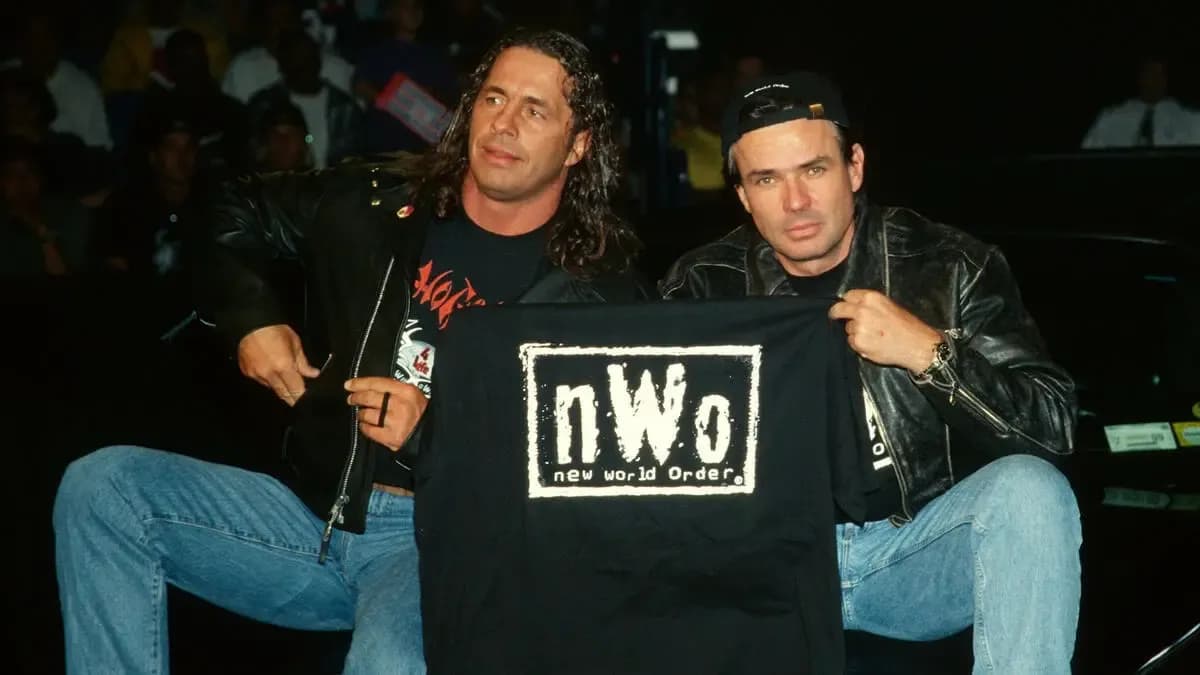
Waltman was not the first WCW wrestler to make the wartime move to the WWF. Steve Austin and Vader both did so as 1995 turned to 1996, but for as supremely talented as they were, neither man's debut was really viewed as the WWF getting one over on their competitor. Jeff Jarrett's 1997 return came equipped with a worky-shooty promo regarding why he left WCW, but his blistering words didn't exactly swing the momentum. While Brian Pillman created a stir in his 1996 debut, the momentum of the nWo drama on the other channel drew a greater audience than whatever "The Loose Cannon" had to say.
When Waltman was fired by Bischoff, WWF had by then started picking up steam. Austin was the franchise player that led the pack, and "Attitude" was slowly becoming the fresh flavour of the industry. WWF was becoming cool again, and a wildly successful WrestleMania (aided by Mike Tyson in a starring role) had the Federation rapidly gaining on the still-hot WCW.
Waltman's firing and subsequent return came about at the right time for the WWF. Eyes were turning back to the product, and here was a high-profile ex-WCW talent that had something venomous to say about Hogan and Bischoff, as well as his friends that he felt Bischoff was holding for ransom.
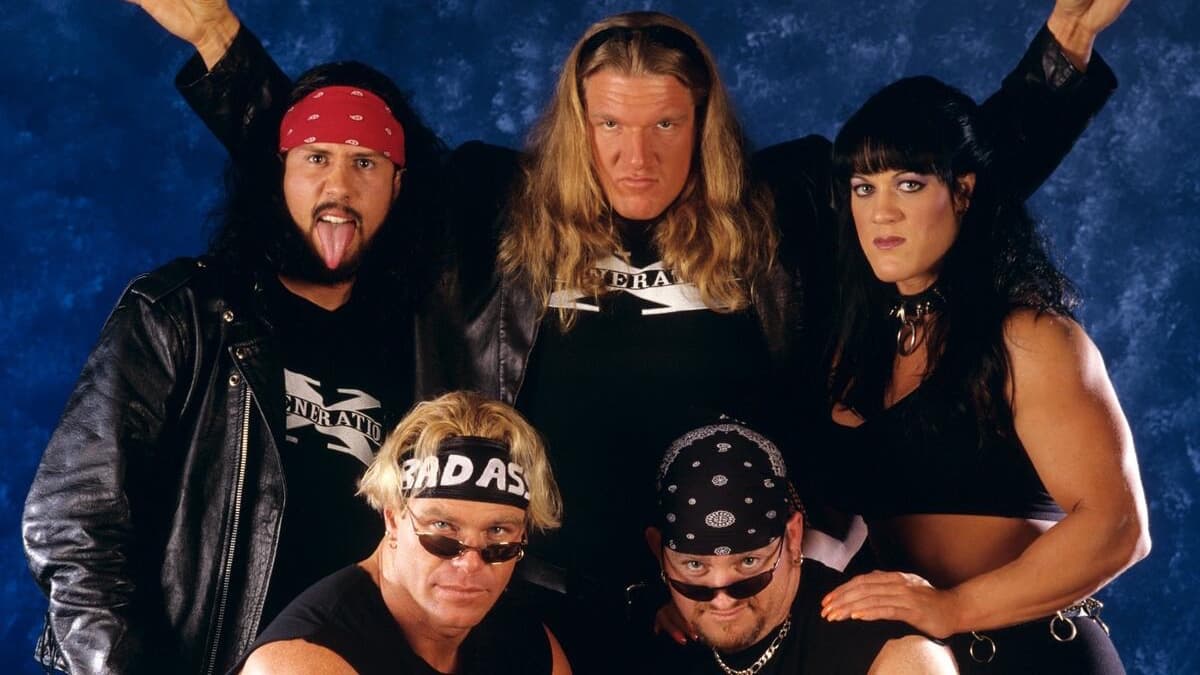
Sean Waltman was the first WWF acquisition in the Monday Night Wars that really felt like WWF's gain was truly WCW's loss. As was written in The Death of WCW: "To fans watching at home, it appeared that a big WCW star had suddenly decided that the WWF was really the place to be."
Today, Bischoff and Waltman are on positive terms, and have many good things to say about each other. Bischoff regrets the frigid manner in which he fired Waltman, but justifies his right to do so, given the circumstances. As far as the firing went, Bischoff admitted: "I really didn’t think it through. I was so hot, I was so p*ssed off and I was mainly p*ssed off at Barry more than Sean."
While fences have been mended between the two iconic nWo members, the story remains a fascinating look at the decisions that get made amid heated circumstances, and how quickly a rival promotion is willing to take advantage of a competitor's fractious state of affairs.