Steve Austin's WCW Run - What Went Wrong?
Why WCW ended up firing Steve Austin

Dec 3, 2025

Why WCW ended up firing Steve Austin
Dec 3, 2025
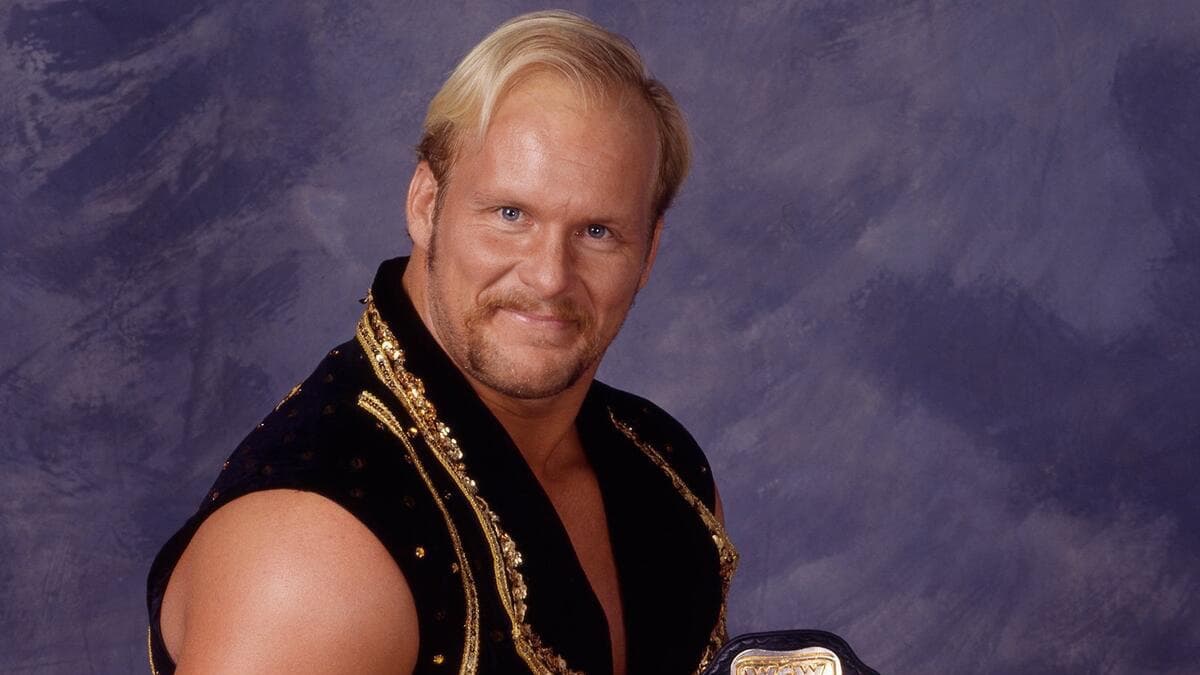
Over 20 years on from his full-time retirement, “Stone Cold” Steve Austin’s legacy as one of the greatest pro wrestlers of all time remains intact. He was a draw, strong in-ring worker, catchphrase dispenser, merchandise mover, and a pop culture icon with a sustained run of greatness from 1996 until 2003 that is unlikely to be precisely duplicated.
Before he began using the Stunner, however, Steve Austin was Stunning, and “Stunning” Steve Austin spent the early 1990s as an upper-level talent in World Championship Wrestling who had future world champion written all over him.
Yet in 1995, following a long stretch of frustration, contentiousness, and bad luck, Austin found himself fired from WCW by Eric Bischoff.
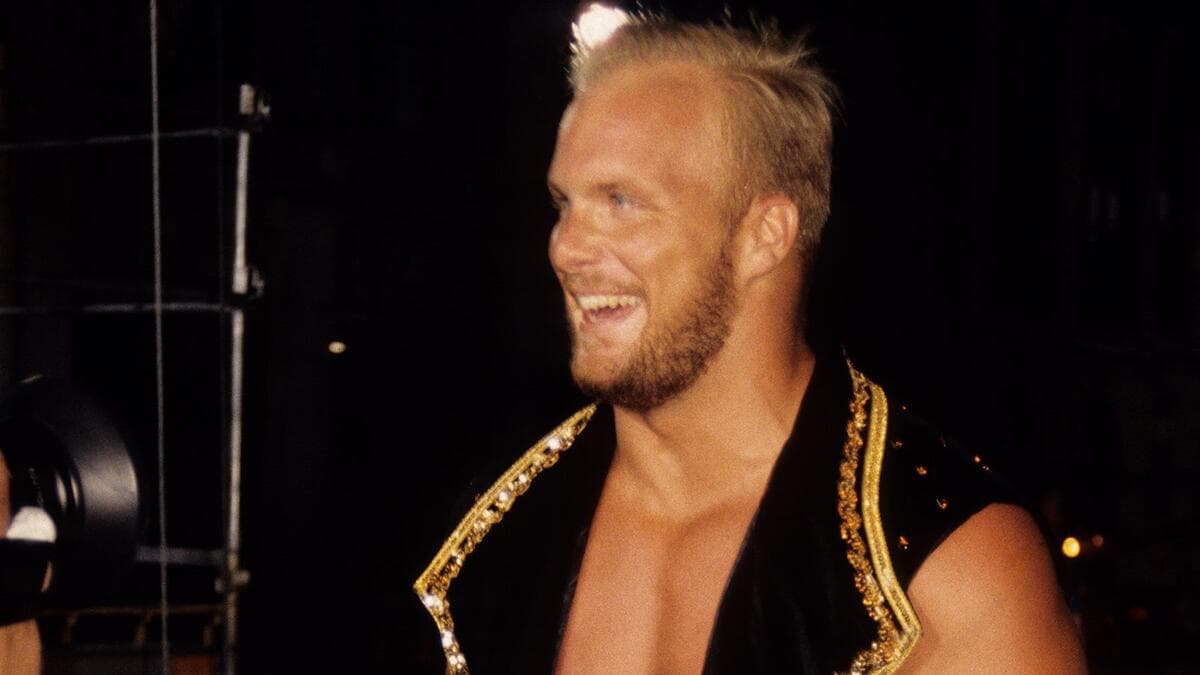
“Stunning” Steve Austin was completely different from the black trunk-wearing goatee-adorning hellraiser that would be WWE’s top star during the Attitude Era. Instead, early Austin had Zubaz-style trunks, plain white boots, a clean-shaven face, and a receding head of blonde hair.
Austin was brought into WCW in May of 1991, despite having less than two years of in-ring experience, and WCW immediately realised Austin's potential as he defeated "Beautiful" Bobby Eaton for the NWA Television Title three weeks after his debut.
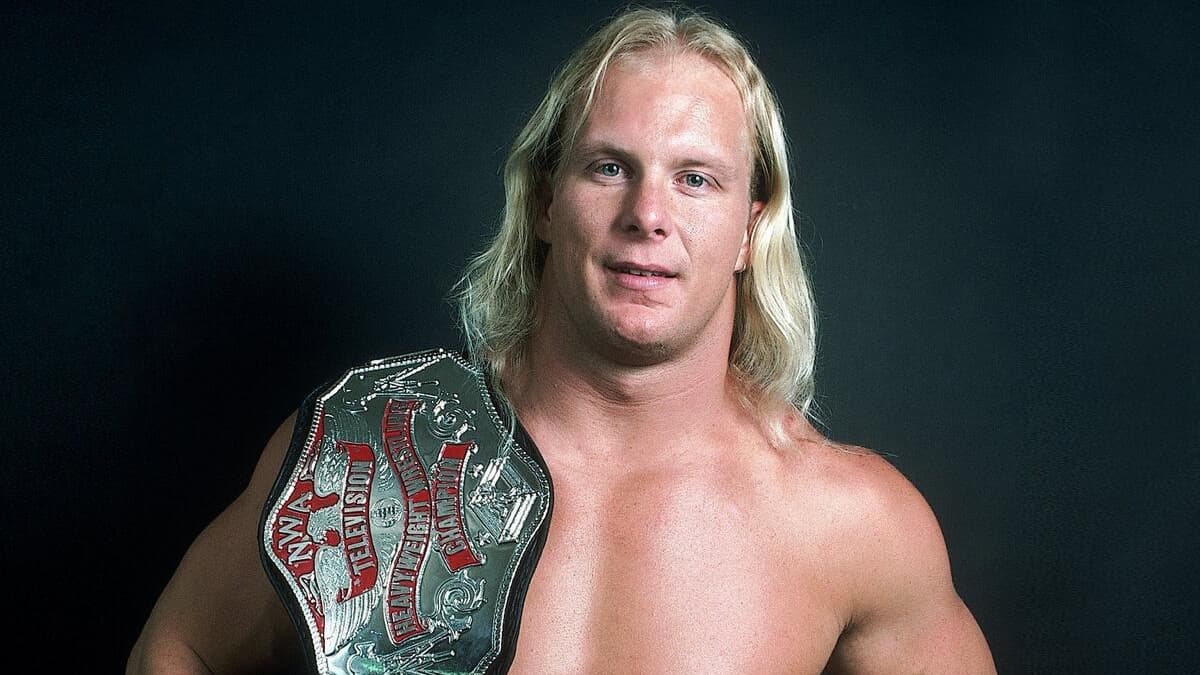
Austin's credits and accolades over his first three-plus years in WCW included two reigns as Television Champion, one of which lasted 329 days, membership in Paul Heyman's Dangerous Alliance, a transcendent partnership with Brian Pillman as The Hollywood Blonds that netted tag team gold, and two reigns as WCW United States Champion. He was also a participant in the famed 1992 WarGames bout, and battled with major stars like Sting, Ric Flair, and Ricky "The Dragon" Steamboat.
Austin's position in the Dangerous Alliance was somewhat comparable to Randy Orton's in Evolution in that he was the youngest member of a majestic group, the thoroughbred that would thoroughly dominate the sport in days to come.
That window of top-level greatness only seemed to be opening more, too. At Starrcade 1993, Austin defeated Dustin Rhodes in a two-out-of-three falls match to capture the WCW United States Title for the first time. In the months ahead, Austin held off viable challengers like The Great Muta, Johnny B. Badd, and Ricky Steamboat in pay-per-view matches.
Then, in what easily ranks among Austin's finest WCW bouts, he lost the title to Steamboat at the August 1994 Clash of the Champions in Cedar Rapids, Iowa, bringing to an end his eight-month reign as WCW's secondary champion.
The two men were set for a rematch at Fall Brawl three and a half weeks later, but serious complications arose as Steamboat badly injured his back during the August title change, and though he pushed through the house show loop in the days following the match, the injury appeared to be career-ending and basically was, with Steamboat not wrestling again until 2009.
The injury was mostly kept under wraps until the pay-per-view, where an unable-to-compete Steamboat surrendered the belt. Austin was declared the new champion by forfeit, but on-screen president Nick Bockwinkel was there to make an additional ruling - Austin had to defend the belt against a stand-in opponent then and there.
In a curious decision, WCW dispatched 40-year-old Hacksaw Jim Duggan - who had only started wrestling for WCW that summer - out to challenge Austin. In just 35 seconds, Duggan pinned a standoffish Austin with a back body drop and a splash.
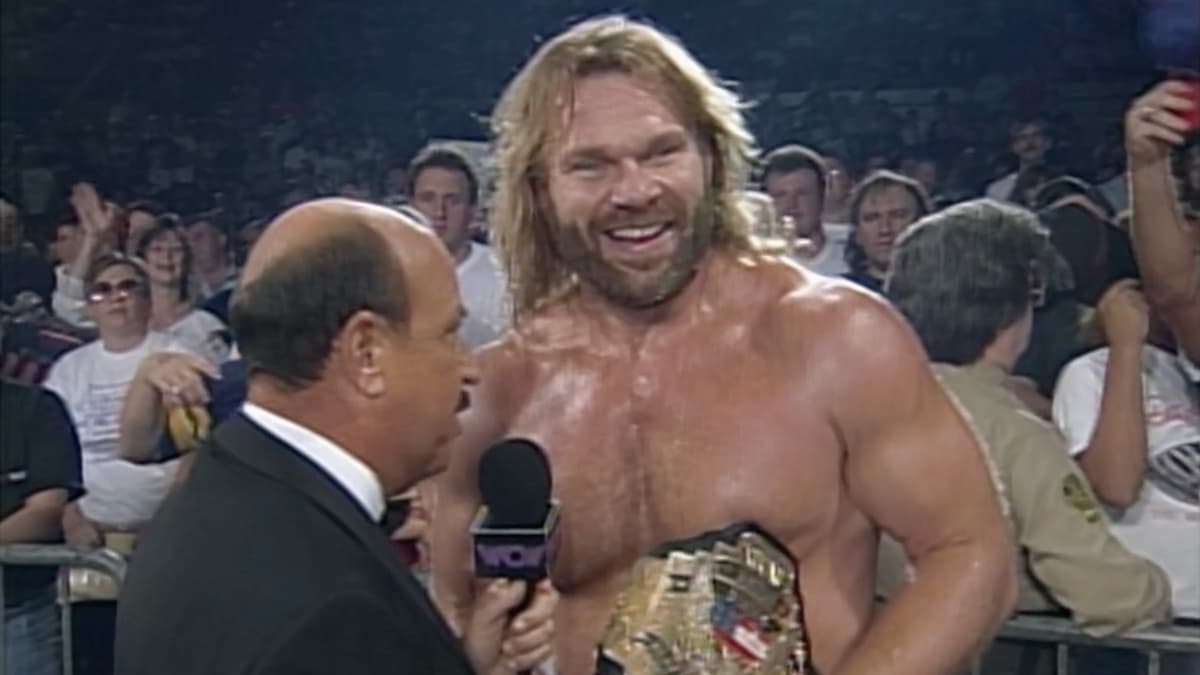
Austin continued to feud with Duggan over the coming months, but rumours suggested something bigger was being planned for “Stunning” Steve. When Ric Flair was forced into kayfabe retirement at the 1994 Halloween Havoc, his valet Sherri Martel was left without an on-screen partner. According to the Wrestling Observer Newsletter, plans were in place for Sherri to start managing Austin, while Austin was set to use some of Flair’s mannerisms. This would lead to Flair eventually making a comeback in 1995 as a babyface in order to feud with the theoretical "next Flair" in Austin - a generational clash between two shrewd wrestlers that knew every trick in the book.
Those plans never came to fruition, though, and Sherri never appeared on-screen as Austin's manager, despite WCW taping matches with her in his corner. Instead, the legendary Harley Race stepped in as Austin's manager that November for what turned out to be a very brief union as Race was badly injured in a car accident in early 1995, forcing him out of his on-screen role.
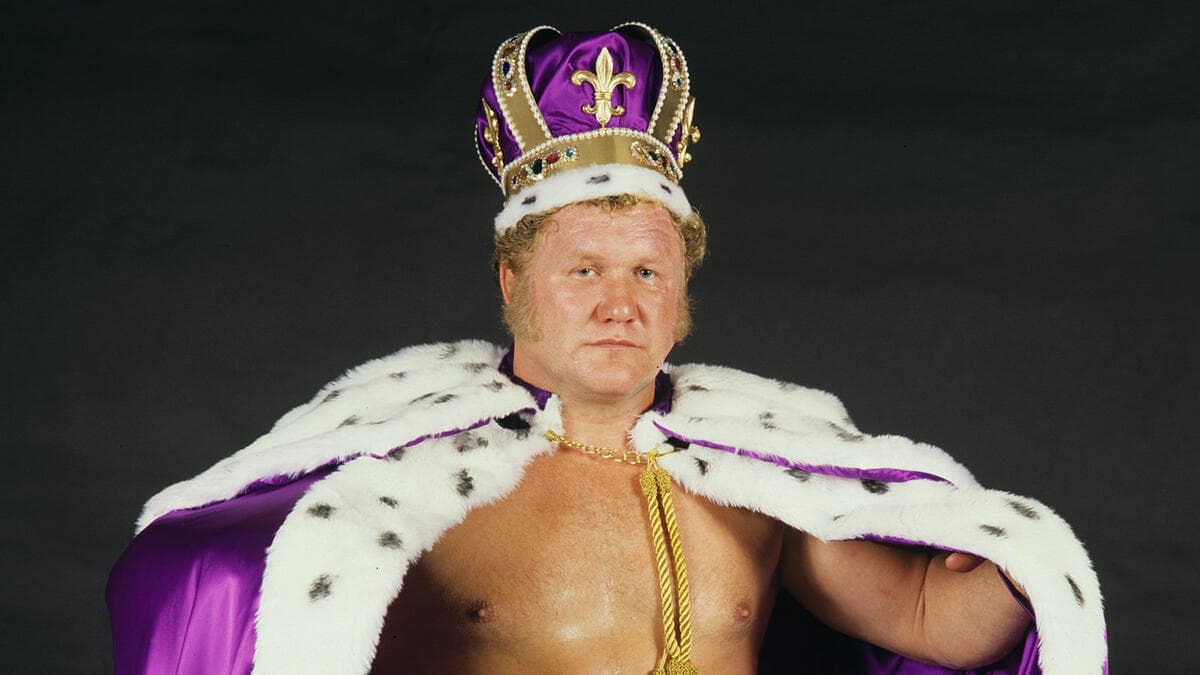
It wouldn’t be long until Austin disappeared from WCW TV too. After taking a disqualification loss to Duggan in a rematch at Halloween Havoc, Austin lost to Hacksaw once more via DQ at November's Clash of the Champions, this time in just 54 seconds. The truncation of the match was due to Austin sustaining a serious knee injury days before the Clash show, though there were apparently sceptics in the locker room.
Duggan himself noted friction between he and Austin, due to Austin's unhappiness with their angle and his direction, and he believed Austin was faking the injury.
As far as Austin's discontent with working with Duggan, Hacksaw noted that the backstage atmosphere had become decidedly more clique-ish. Duggan was a friend of reigning WCW World Heavyweight Champion Hulk Hogan, and you can't help but notice the sheer number of Hogan allies who debuted in WCW in 1994 after Hogan headed to Atlanta. Austin, meanwhile, had no links to Hogan, and his ceiling now seemed drastically lower.
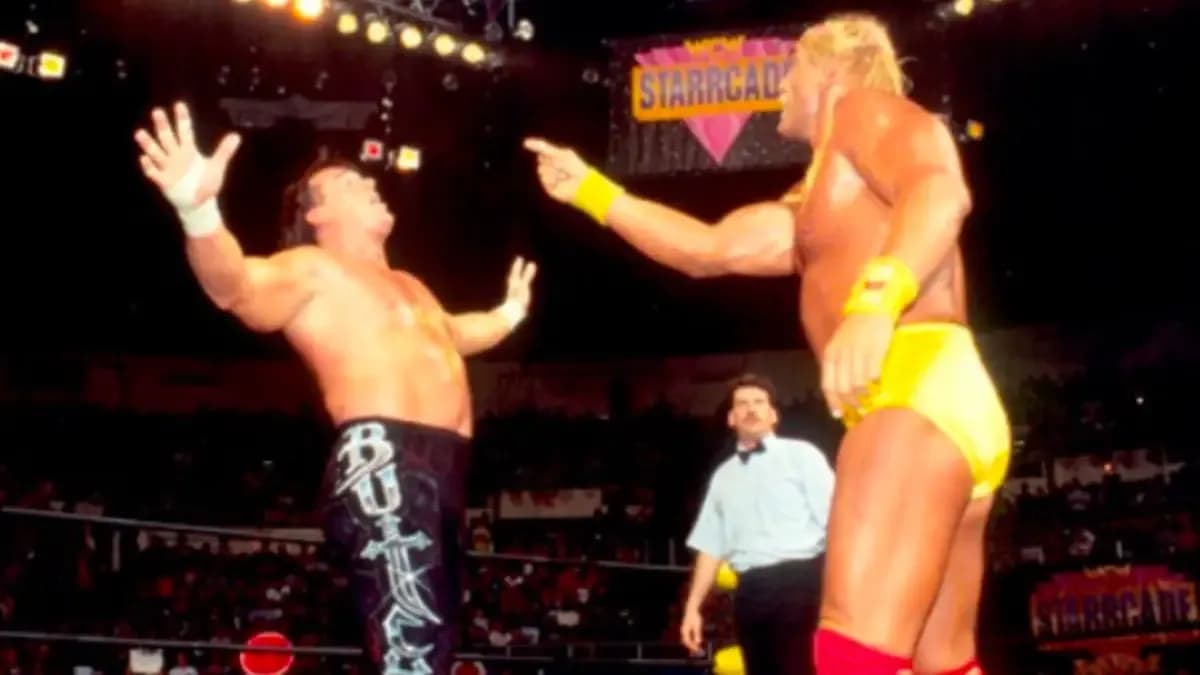
As for the knee injury, it appeared to be legitimate. A later report from Dave Meltzer in the Wrestling Observer Newsletter indicated that Austin suffered two torn posterior ligaments. The injury necessitated missing a one-night appearance in ECW that weekend, and it looked like Austin would be on the shelf for a long time. With major reconstructive surgery needed, it was believed that Austin could be out for upwards of a year.
Instead, Austin didn't have the surgery, and returned to the ring in February 1995, after a total of just two and a half months on the shelf. Unfortunately for Austin, he was injured in his first match back, requiring 12 stitches near his eye following a mishap working with Marcus Bagwell.
Austin then made a more sustained return weeks later and began decimating enhancement talents at lower level TV tapings, but he didn't have much in the way of direction. Pay-per-views like SuperBrawl and Uncensored came and went with no participation from “Stunning” Steve.
That didn’t mean WCW didn’t have ideas in mind for the 30-year-old prodigy. By March 1995, rumours surfaced that in Flair's planned comeback to the ring, there would be a new incarnation of The Four Horsemen. Arn Anderson, of course, would step back into his enforcer role, and Austin was tipped for the Tully Blanchard spot of someone that could go between secondary and tag team championship pictures like Anderson. Those considered for the fourth spot were the likes of Vader, a returning Blanchard, a debuting Curt Hennig, or a heel-turned Dustin Rhodes.
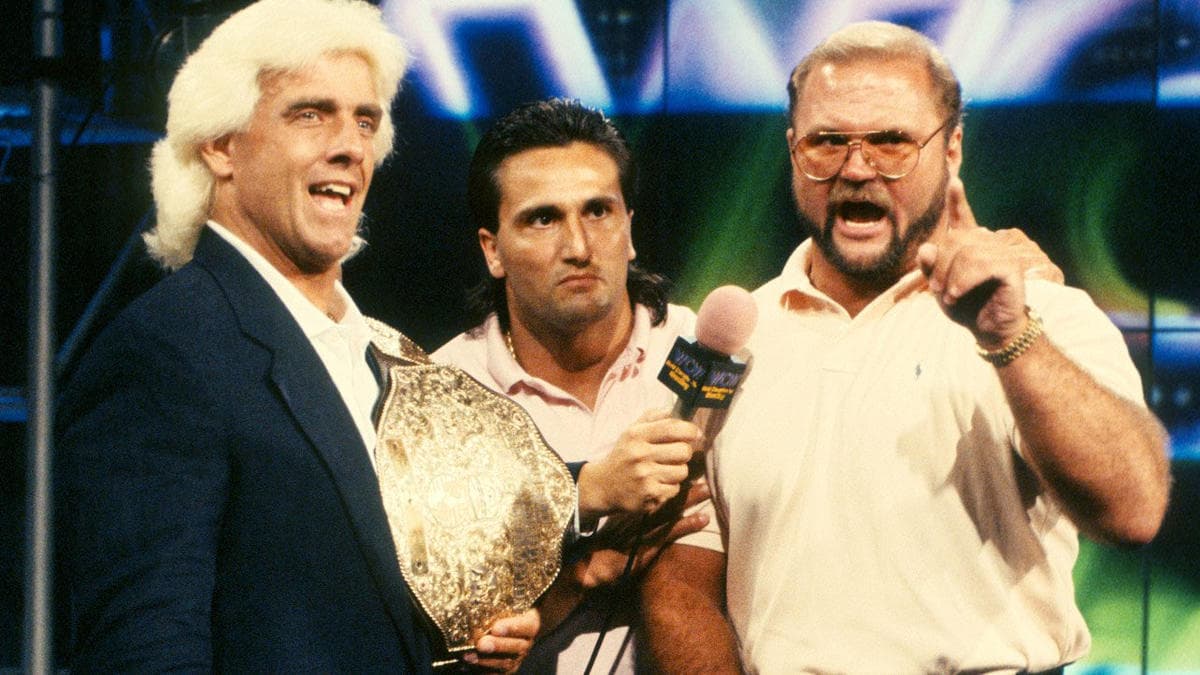
Those plans didn't come to fruition, however, and not only was Austin not going to be a Horseman, but based on some reports, his days in WCW looked to be numbered. In the middle of April, it was reported that Austin's name was floated amid potential roster cuts. Though Austin had reportedly been disgruntled with his place in WCW for some time, he remained on board for the time being.
The following month, the discontent only escalated when Austin refused to put over the latest WCW pet project at a TV taping. Brought into WCW two months earlier, the musclebound but inexperienced Richard Wilson was cast as The Renegade, a clear knockoff of The Ultimate Warrior. With his power, Hulk Hogan had tried to secure the real Warrior for a WCW run, but as those attempts failed, the company opted to create a new Warrior instead.
With similar hair, face paint, and theme music to the genuine article, Renegade burst onto the WCW scene, and was very quickly shown to be out of his league. His inexperience was painfully evident, as to even the more ardent Warrior haters, Renegade made Jim Hellwig look like Bret Hart in terms of coordination and technique.
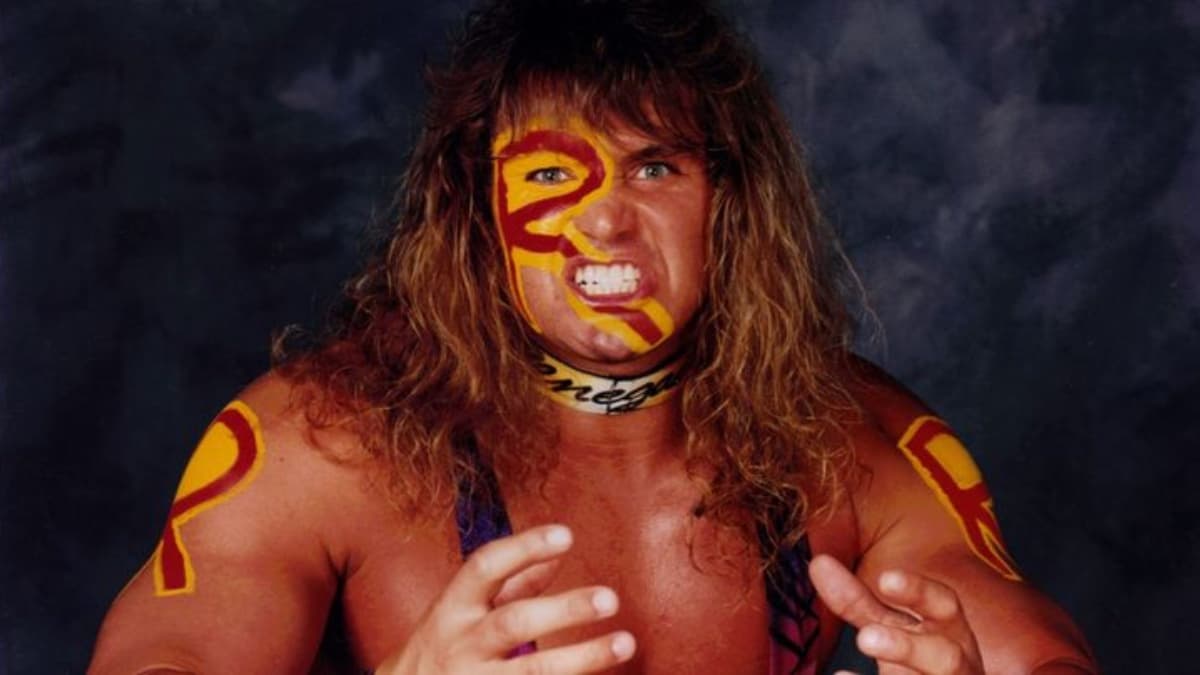
WCW insisted on pushing Renegade despite his glaring deficiencies and he was scheduled to defeat Arn Anderson for the WCW World Television Title at June's Great American Bash. This meant Renegade needed quick wins over established names en route to the title match and one of those names was planned to be “Stunning” Steve Austin.
The future-Texas Rattlesnake was penciled in to lose to Renegade at a set of TV tapings, but he flat out refused. At the time, Ric Flair was the booker of WCW and he and Arn Anderson did all they could to reason with Austin, trying to talk him into taking one for the team. Austin, however, had grown tired of being a team player, especially for a team that had little interest in using someone of his calibre strongly. He stood firm on his decision, gathered his belongings, and left the arena.
Austin later met with Eric Bischoff to discuss his usage, especially as Austin had been booked as little more than an afterthought for the better part of seven months. If WCW really wanted him to put over The Renegade, Austin wanted something substantial, something tangible, for his own career.
An agreement was reached in that meeting, with the two sides deciding The Hollywood Blonds would be revived. Austin and Pillman came together in 1993 as the sort of goading antagonists that wrestling legends are made of, and their all-too-brief run as WCW's top duo is still fondly remembered today as a gem of the time.
Pillman had also found himself in WCW purgatory like Austin and putting the duo back together had success written all over it.
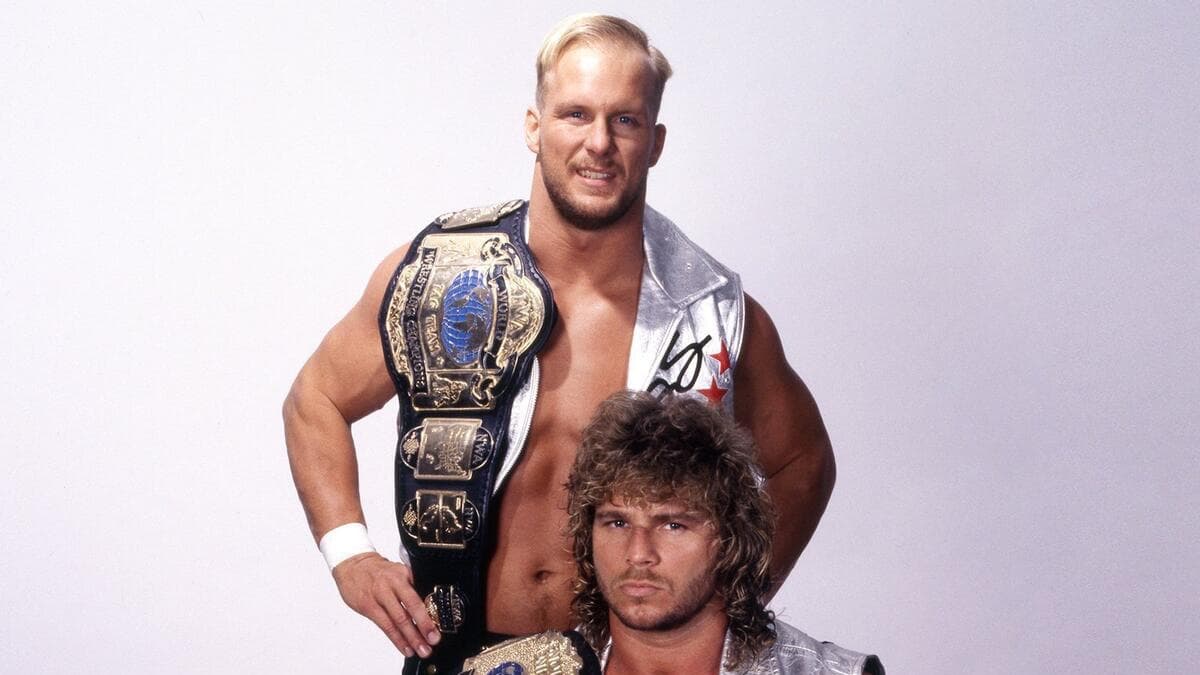
Ahead of the planned reunion with Brian Pillman, Steve Austin still had other WCW bookings and he defeated enhancement talent Eddie Jackie on the pre-show of Slamboree 1995, picking up the win in one minute following a Gourdbuster. This would turn out to be Steve Austin’s final match in WCW.
Following Slamboree, Austin jetted to Japan for the 1995 Fighting Spirit Legend tour with New Japan Pro-Wrestling. Austin wrestled 16 matches in 20 days on the tour, working singles bouts and also teaming with Arn Anderson and Ron Simmons. On the third night of the tour on May 27, 1995, however, during a match alongside Anderson against Shinya Hashimoto and Manabu Nakanishi, Austin tore his right triceps after landing wrong on his arm following a splash.
Austin gutted through the rest of the tour and underwent surgery when he was back in the United States, with “Stunning” Steve looking set to be out of action for a few months. Austin’s injury postponed the planned Hollywood Blonds reunion and the idea was scrapped altogether after Ric Flair was replaced as booker by Kevin Sullivan, with the Pillman biography Crazy Like a Fox noting that Sullivan killed off the plan of the Blonds reuniting.
During the summer of 1995, all was quiet on the Austin front. A return to the ring didn't seem likely until well into the autumn, and other than his hanging out backstage to see friends at WCW's TV tapings, Austin was mostly persona non-grata. Then on or around Friday, September 15, Austin became completely persona non-grata as far as WCW was concerned.
After several months on the shelf and following a year of injuries, minimal usage, and vocalised frustrations regarding how he was going to be used, Steve Austin was fired by World Championship Wrestling.
As Eric Bischoff recalled, Austin was supposed to be on hand at a late-summer TV taping in order to film an interview to sort of refresh his character and keep the inactive Austin from becoming too forgotten. Austin, however, was not present on the day of the taping, which Bischoff conceded may not have been Austin's fault. The disorganisation of WCW sometimes reached epic proportions, and through poor communication, it's possible that Austin didn't even know he was supposed to be at work that day.
Bischoff had Tony Schiavone call Austin to get the wrestler to come to the taping. Schiavone soon reported back to his boss that he had reached Austin's wife, who told Schiavone that her husband wasn't there. Bischoff, however, claimed that Schiavone told him he "heard Steve yelling in the background, 'Tell that son of a b*tch I'm not home, and you don't know where I am.'"
Bischoff brought this situation up on Austin's podcast in 2014, to which Austin admitted he doesn't remember exactly how that part went down, but conceded that it was probably accurate.
Unhappy with what he felt was an unprofessional act on Austin's part, Bischoff made the decision to cut him loose.
Bischoff recalled Austin's firing on 83 Weeks in 2020, saying (H/T Wrestling Inc.):
"We were paying Steve a lot of money. It was a guarantee. And that was a consideration, not the most important consideration. My goal, knowing that Steve was going to be injured and going to be back eventually was to keep his character alive and not just let it disappear like it fell off the face of the Earth. We were producing a show, WCW Saturday Night, and I thought I know he can’t wrestle but let’s get at least a backstage promo on Steve Austin just to keep him visible so he didn’t fall into that out of sight out of mind category.
"I told Tony Schiavone to give Steve a call, it was early enough in the afternoon, he could’ve driven in and shot the promo and been back home by 7 o'clock that night. Should’ve been no big deal right? Tony didn’t want to bury Steve, I put Tony in a tough spot.
"Tony called Steve and Steve’s wife answered the phone, and the way it was reported back to me from Tony was that Steve’s wife said ‘Hey Steve, Tony Schiavone is on the phone he wants to talk to you’, and Tony could hear Steve yelling back to his wife, 'Tell them sons of b*tches I’m not here.'
"Well, that’s pretty bullsh*t right? Thats bullsh*t. He was there, he just didn’t want to have a conversation. He didn’t want to hear anything I had to say, or maybe he was in pain, I don’t know. Tony comes back to me and says ‘Yeah I called Steve’s house and spoke to his wife and I hate to say this but I could hear Steve in the background telling his wife to tell me he wasn’t there.’ There’s certain things that just f*ckin' trigger me, and dishonesty is one of them."
There was further acrimony, however, as the WCW Senior Vice President didn’t fire Austin face-to-face and instead had a termination notice penned, and sent it to Austin's home. The day before it arrived, Austin remembered that WCW Talent Relations Manager Janie Engle called to tell him Bischoff wanted to speak with him. Even before Austin made the call, he admitted he knew what the end result was going to be.
As Austin remembered, over the brief call, Bischoff explained that for what Austin was making - around $200,000 to $300,00 per year - and the amount of time he was unable to work, WCW was exercising their right to terminate his contract. In reality, though, the firing was in response to Austin's reported defiance toward the order to come in.
Bischoff later wrote of the decision to not fire Austin face to face: "Given what Tony had told me, I didn't feel like I owed him any other type of response...I have to admit, the way I handled it wasn't great, though given the same situation I would probably react the same way."
One year earlier, Steve Austin was feuding with Ricky "The Dragon" Steamboat for the WCW United States Title, theoretically one step below the heavyweight championship of the world. And now he was gone, with neglect, bad luck, and even worse feelings filling that 365-day divide.
As a post-mortem to the firing, Dave Meltzer of the Wrestling Observer Newsletter wrote: "Austin's main problem appeared to be in the cliquish nature of WCW. He didn't hang with the right crowd. When the Hogan camp got into power, they dismissed Austin as a highly-paid wrestler who was a good worker with no charisma, and in their view of wrestling, workrate meant next to nothing."
Austin later expressed that his firing from WCW shouldn't have been all that surprising, claiming that Bischoff himself didn't see him as marketable. He quoted Bischoff as saying to him: "You go out there in those black trunks and black boots, and there's not a whole lot of ways for me to market that."
In short order, Austin turned up in ECW at the behest of old friend Paul Heyman. “Stunning" Steve was dead, but this version of Austin was just as vociferous, and he saved his sharpest barbs for Hogan and Bischoff. Austin, wearing black trunks and black boots, would become one of the biggest pro wrestlers ever.
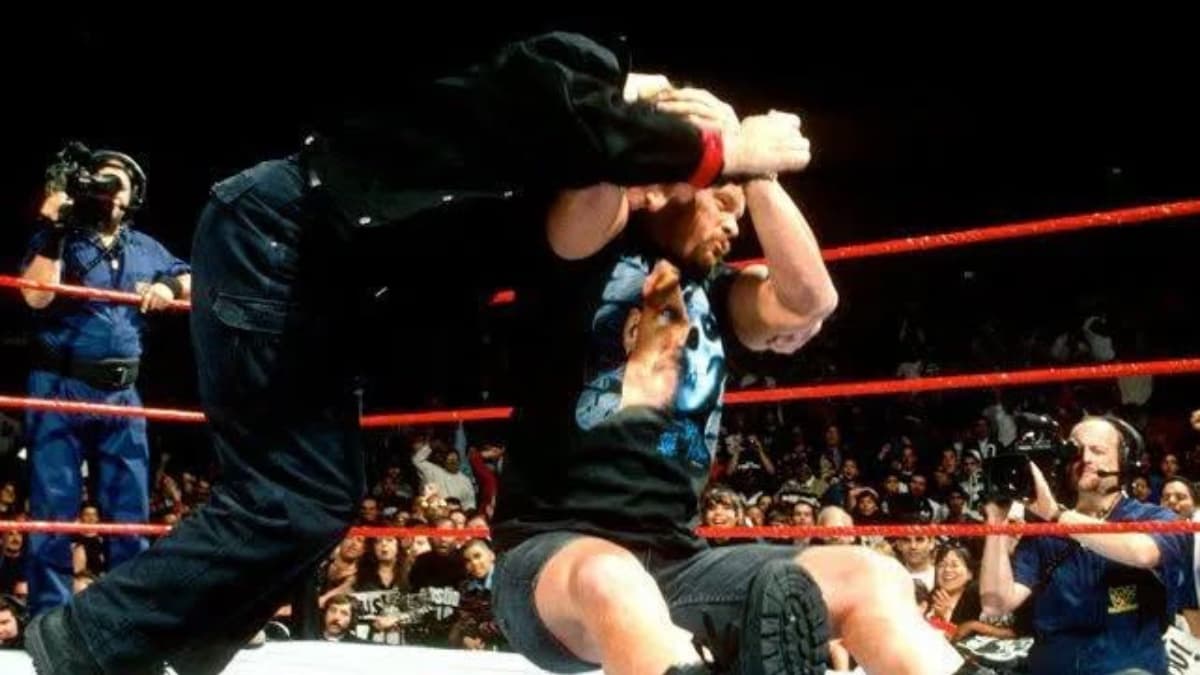
Hindsight is 20/20, and to look at Austin's final year in World Championship Wrestling, it's almost embarrassing that so little was done with the man that would come to redefine the pro wrestling zeitgeist in the very near future. Especially when he had demonstrated his aptitude and capabilities in the preceding years.
Then again, WCW had undergone such radical changes amid the "Hogan-isation" of the promotion, as the once-unprofitable 'rasslin' company was hitching its wagon to the proven star and his whims. With all of the reorganisation that comes with radical change (especially in a disorganised company like WCW), some talented performers were bound to be lost.
Austin's injuries did him no favours, obviously, but one can imagine the pain of unfulfilled promises being just as brutal. Given how the previous year had gone for Austin, many wouldn't fault him for being at odds with his employer. Both Austin and Bischoff came to view the parting of ways as beneficial for all involved, though Austin most certainly benefited more.
Nobody at the time (probably not even Austin himself) could have predicted Stone Cold's atmospheric ascent into pro wrestling lore. And by that token, few today could truly fathom a national wrestling promotion washing its hands of the man behind that legendary character.
The bottom line is both of those events took place. For rather complex reasons, they're equally extraordinary.