WWE WrestleMania I: A Huge Gamble That Changed Pro Wrestling Forever
The true story of WWE WrestleMania I

Jun 12, 2026

The true story of WWE WrestleMania I
Jun 12, 2026
Today, the biggest event for World Wrestling Entertainment every year is WrestleMania, with the show often taking place in March or April and serving as a season finale for the company that is supposed to feature the best matches the organisation can offer.
Supercards were already a part of professional wrestling by the mid-1980s, but the then-World Wrestling Federation lacked such an annual event when Vince McMahon decided to gamble his financial future to host a massive event from Madison Square Garden on March 31, 1985.
Since acquiring the World Wrestling Federation from his father and others in 1982, Vince McMahon Jr. had made moves to expand the WWF across North America, further destroying the territory system that had defined professional wrestling for decades, with McMahon even quitting the National Wrestling Alliance shortly after he became the owner of the WWF.
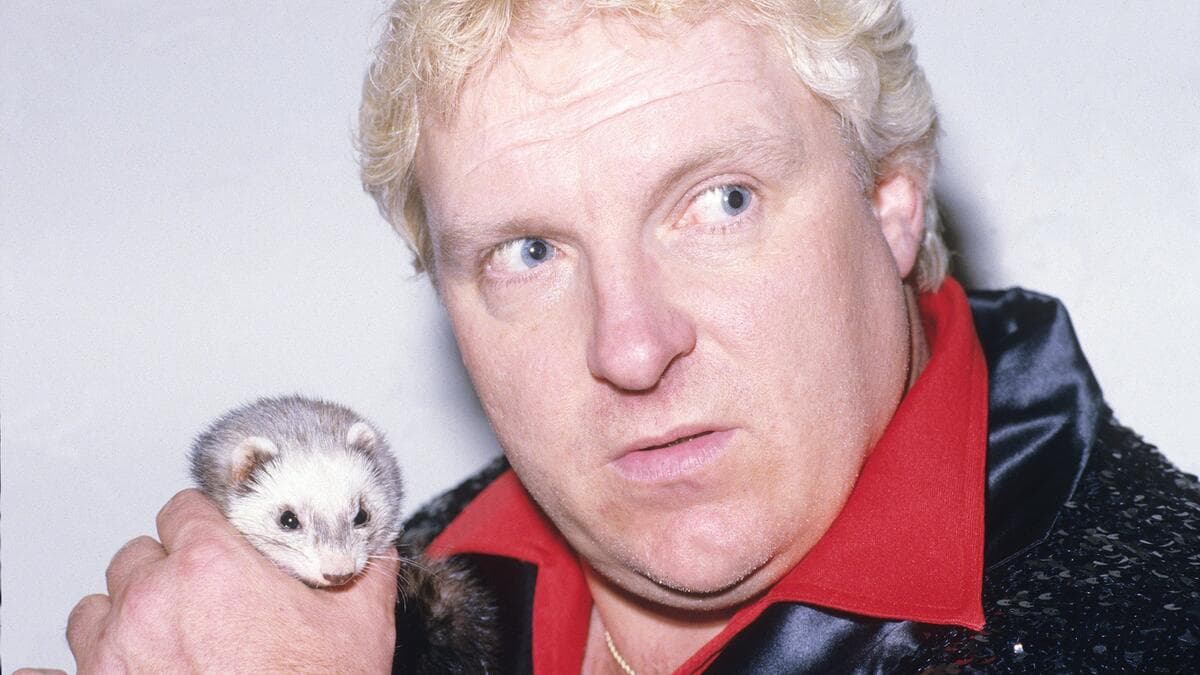
One such method of WWF expansion saw McMahon sign the best talent available from the AWA and the NWA territories, strengthening the WWF and weakening the opposition in the process. In 1984 alone, the likes of Roddy Piper, Jesse “The Body” Ventura, Mad Dog Vachon, Nikolai Volkoff, The Spoiler, Kamala, Ken Patera, Junkyard Dog, Barry Windham, Mike Rotunda, Hilbilly Jim, and Bobby “The Brain” Heenan all joined the World Wrestling Federation, turning an already-impressive roster of talent into a staggering overabundance of all-stars.
Vince McMahon also simply purchased the competition, acquiring NWA Hollywood in 1983, which gave McMahon the rights to promote shows in California. McMahon then became the majority owner of Ontario’s Maple Leaf Wrestling in 1984, and then Stampede Wrestling was purchased from Stu Hart in September of 1984 for a reported fee of $250,000 up front and 10 per cent of the house for all live events in Stampede’s regular towns. As part of the deal, Vince agreed to hire Bret Hart, Dynamite Kid, and Davey Boy Smith, while offering to move Bret's brother Bruce into an office job as their liaison in western Canada. For a number of reasons, however, Stampede opened back up one year later, ending the Vince-Stu agreement, though Bret and the future British Bulldogs would remain in the WWF.
A controversial purchase in April 1984, though, saw Vince McMahon become the owner of Georgia Championship Wrestling, acquiring the Briscos and Jim Barnett’s shares in the promotion for $900,000, much to the opposition of GCW booker Ole Anderson, who was powerless to do anything about it. The purchase allowed the WWF to take over GCW’s two-hour time slot on TBS and WWF aired for the first time on the superstation on July 14, 1984 on what became known in wrestling lore as Black Saturday.
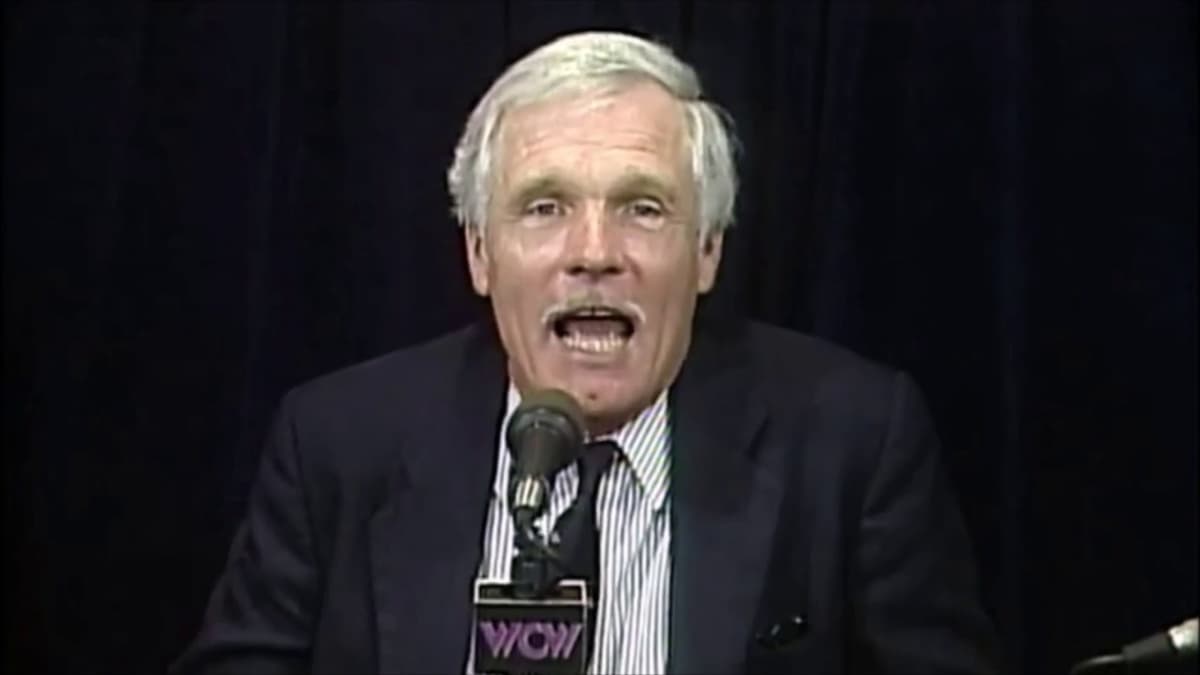
The move proved to be a disaster for the WWF as angry fans flooded TBS with angry phone calls and letters, with TBS owner Ted Turner becoming just as angry as his viewers after McMahon reneged on an agreement to continue running live Atlanta-based studio wrestling for the time slot, instead filling the TBS program with warmed-over matches from earlier WWF tapings.
Eventually, the ratings reached a point where McMahon sold the TBS time slot to Jim Crockett Promotions for $1 million in March of 1985, As legend has it, when the sale was completed, McMahon grumbled to Crockett, "You'll choke on that million." McMahon’s attempts to become a cornerstone of Ted Turner’s TBS would eventually have unintended consequences through the remainder of the century in the Monday Night Wars.
Beyond signing the best talents and simply buying up territories, the WWF moved into new areas of the United States through live events and TV stations. Early in 1984, Vince McMahon usurped the AWA’s time slot on San Francisco's KTZO channel 20, simply by offering to pay $2000 a week if the station aired the WWF instead. Then in April 1984, it was announced that WWF programming was coming to AWA’s hotbed of Minneapolis, Minnesota on Saturday nights via WTCN channel 11.
Elsewhere, the WWF gained television clearance in cities occupied by McMahon’s former peers of the National Wrestling Alliance. Chicago gave WWF a Saturday morning time slot on then-independent station WFLD-32 and, in the months ahead, the sports entertainment marvel crashed into the airwaves of Louisville, Nashville, Little Rock, New Orleans, Norfolk, Richmond, Memphis, and Dallas. This would only put McMahon into further conflict with the Von Erichs’ World Class Championship Wrestling, Bill Watts and Mid-South, Jerry Jarrett in Memphis, Verne Gagne’s AWA, and Jim Crockett Promotions in the Mid-Atlantic region.
The WWF needed new programming to populate the airwaves and joining All-American Wrestling and Championship Wrestling in WWF’s portfolio in 1984 was Tuesday Night Titans on USA Network, while Prime Time Wrestling debuted at the beginning of 1985.
The WWF also had the biggest star attraction in all of professional wrestling on top as Hulk Hogan, just weeks after jumping to the World Wrestling Federation from the AWA in late 1983, defeated The Iron Sheik to capture the WWF Championship inside Madison Square Garden in a moment that would prove to be the birth of Hulkamania. With his yellow trunks and receding blonde locks, Hogan only helped to enhance the World Wrestling Federation’s popularity.
While the WWF was already gaining in popularity as the 1980s continued, a fortuitous meeting would lead to what would become dubbed the Rock ’n’ Wrestling boom as Vince McMahon’s empire exploded across the United States.
That meeting took place in the autumn of 1983 when music producer David Wolff was on a flight to Puerto Rico. A self-professed wrestling fan, Wolff recognised one of his fellow passengers as Captain Lou Albano, the pugnacious manager of The Wild Samoans. Wolff took advantage of the chance mid-flight meeting with the Captain, and offered him a part in a music video with Wolff’s girlfriend, pop sensation Cyndi Lauper.
At the time, Lauper's first studio album, She's So Unusual, was flying off the shelves, with six of the 10 tracks earning release as singles. Four of the six also cracked the top five of the Billboard Hot 100 charts, making Lauper the first female artist to achieve such a feat.
The music video part being offered by Wolff was for the album's first single, ‘Girls Just Wanna Have Fun,’ where Albano would play the singer's meatheaded father. Though apparently reluctant at first, Albano was eventually talked into accepting the role by his wife.
As it would turn out, WWE may owe much of their subsequent success to the persistence of Geraldine Albano, because her husband became an unlikely pop culture icon through his portrayal of Lauper's unpalatable, yet easily-overpowered father in the video.
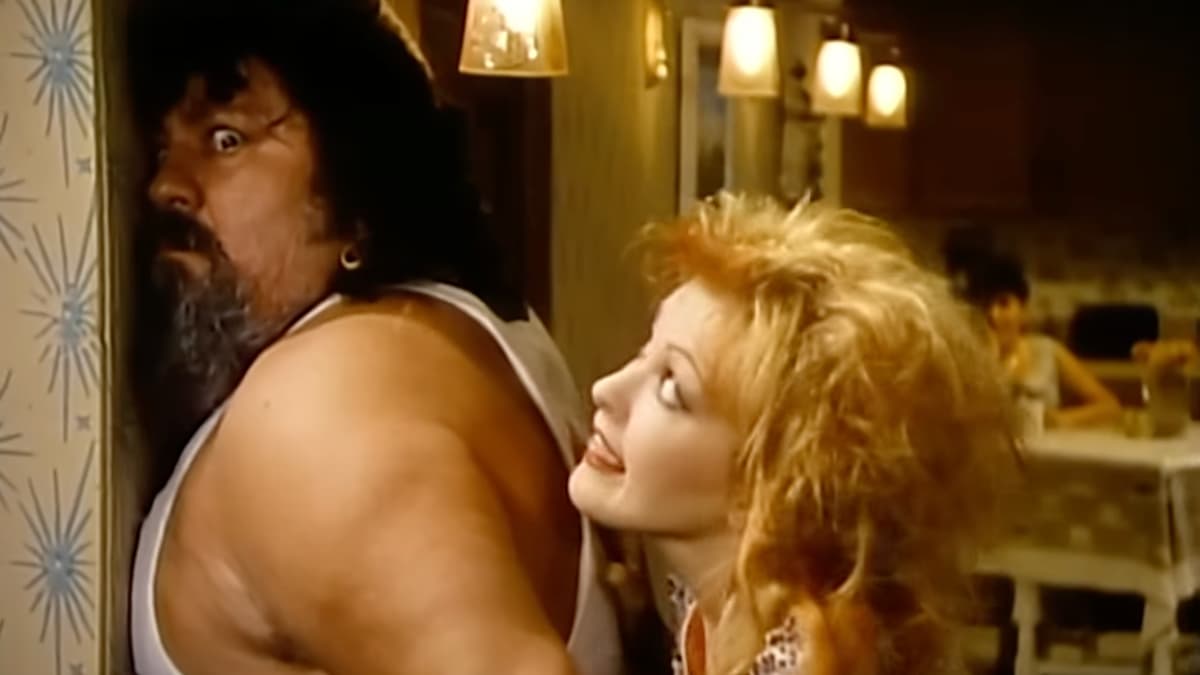
Premiering in December 1983, the Girls video received frequent airplay on highly-popular cable channel MTV. Thanks in part to Lauper's soaring popularity, Albano's mean-looking face became a familiar face to millions of teenagers and young adults, even those that might not have recognised Hulk Hogan on sight.
In the eyes of Wolff, there was enough juice in the Albano connection to attempt something more ambitious. In the spring of 1984, he reached out to Vince McMahon with the deal that if the WWF played Lauper’s videos on their programming, Lauper would promote the World Wrestling Federation in her mainstream TV appearances. This would also lead to Lauper appearing in-person on WWE programming.
The angle kicked off at a Championship Wrestling taping in mid-April 1984. There, Albano filmed two Piper's Pit segments to air over the coming weeks in which the bloated braggart personally took credit for Lauper's success. Albano even vowed to bring Lauper to Piper's Pit, a demonstration of his supposed clout.
The bit dragged out a few weeks, with Lauper not appearing, and Albano insisting he would deliver her yet. Wolff got involved in the angle, first sending a legal letter disputing Albano's claims to Lauper's success, then later appearing on Piper’s Pit himself, at which point Wolff said he would bring Cyndi to the Pit.
Finally, on the June 16 broadcast, more than six weeks after the storyline first made airwaves, a gregarious Lauper showed up to Piper's Pit. After a few beats of small talk, Piper went on to refer to Albano as Lauper's manager, to which Lauper gently, but firmly, denied was the case. This brought Albano out to try and save face, but once he made a few misogynistic remarks, Lauper's kindly tone turned disbelieving. After heated words were exchanged, an irate Lauper swung her purse at both Albano and Piper to the cheers of the crowd, before Wolff ran on set to pry her away.
The angle continued with Lauper wanting to beat Albano at his own game as a manager. She told the Captain to pick a female wrestler, and she would get her own for a match to see whose charge would come out victorious.
Albano selected the WWF Women's Champion of an alleged 28 years The Fabulous Moolah. To counter, Lauper chose 22-year-old Wendi Richter, a five-year pro that held the NWA United States Women's Championship the prior year.
Madison Square Garden, as was customary, served as the battleground for one of pro wrestling's most seminal moments. On Monday, July 23, the MSG Network aired an 11-match WWF card, while MTV simulcast the evening's WWF Women's Title bout. Dubbed The Brawl to End it All, Moolah vs. Richter went on eighth of the 11 bouts, with Albano supporting the champion and Lauper and Wolff ushering the challenger. Richter even co-opted some of her backer's fashion sense, wearing glam-rocker sunglasses and pink donut-shaped earrings that matched her singlet.
The 11-minute match itself wasn't all that good, but it didn't need to be. The result was all that mattered, though even that was achieved in somewhat confusing fashion. Moolah had control as she snared Richter in a waistlock before pulling her back into a bridging pin. However, Richter subtly raised her shoulder on two as referee Jack Lutz continued administering the count.
Moolah and Albano celebrated after the bell while the Garden crowd murmured in confusion and annoyance. Those negative feelings dissipated when Howard Finkel announced that Richter was the new champion, as Moolah's shoulders had remained on the mat during the fall.
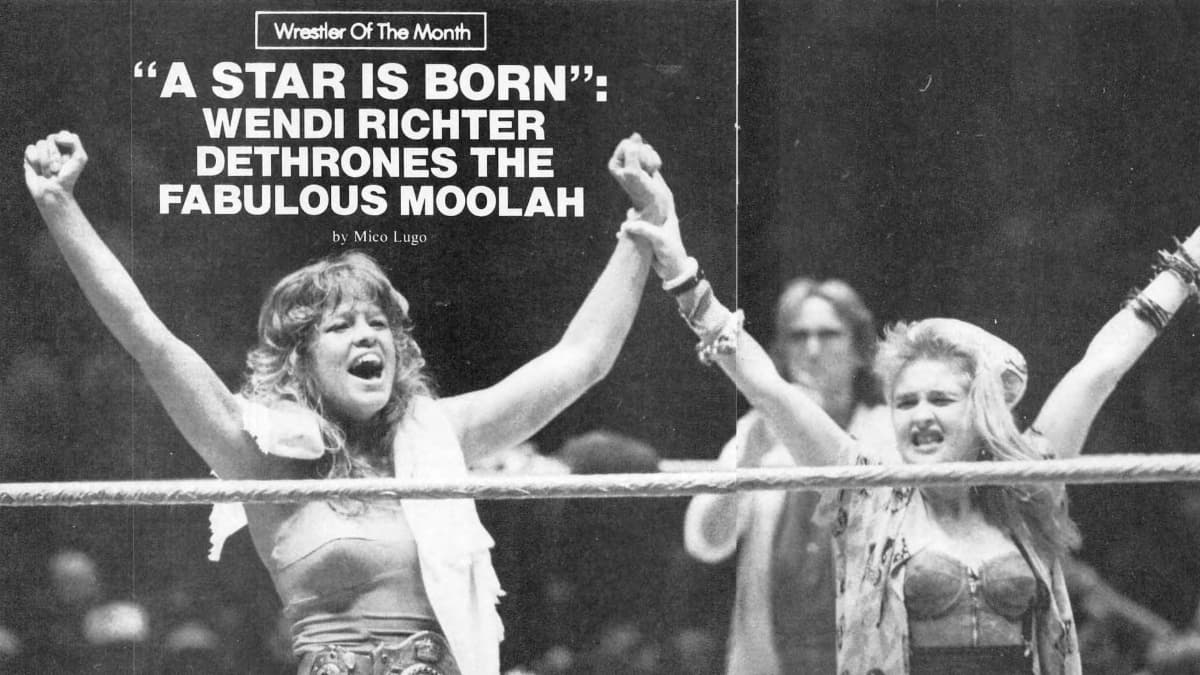
Richter, Lauper, and Wolff were all jubilant, and remained so once they reached the locker room, where Mean Gene Okerlund conducted an interview with the triumphant trio. During their remarks, both Sgt. Slaughter and Hulk Hogan entered the frame to give their congratulations. The 9.0 TV rating made The Brawl to End it All the most-watched program in MTV's three year history.
With that success, the WWF intended to call upon Lauper in future days. This was only the beginning of what became known as The Rock ’n' Wrestling Connection.
The World Wrestling Federation’s 1985 was set to be defined by a major event that, depending on its success or failure, would have major ramifications for the company’s prospects and very survival.
It began in either the autumn months of 1984 or the early days of 1985, when Vince and Linda McMahon jetted off to the Caribbean on vacation. The success of The Brawl to End it All remained fresh in Vince's brain, and he had been pondering a way to replicate that event on a larger scale. There were already supercard templates prevalent in other territories, whether it was Starrcade in Crockett's Mid-Atlantic region or Fritz Von Erich's Star Wars events in Dallas.
McMahon had overseen supercards before, but he understood that the success of July's Brawl to End it All was tied to the Cyndi Lauper/MTV connection. On that Caribbean excursion, Vince mentally started putting together his plans for an all-encompassing gala that would star Hulk Hogan, Cyndi Lauper, and anyone and everyone that could boost the WWF deeper into the stratosphere, whether they be wrestlers or celebrities.
Upon returning to work, McMahon presented the idea at a meeting of his closest confidantes and revealed the name for this historic event would be…The Colossal Tussle. Company booker George Scott openly objected to the name, going so far as to dance around the meeting room while repeating "Colossal Tussle" in a mocking tone.
Ring announcer Howard Finkel, the first individual hired by Vince McMahon to work at Titan Sports, came up with a better name in WrestleMania. Finkel later claimed to have drawn inspiration from "Beatlemania", when the band conquered America 20 years earlier. Fortunately for the history of pro wrestling, WrestleMania won out over The Colossal Tussle.
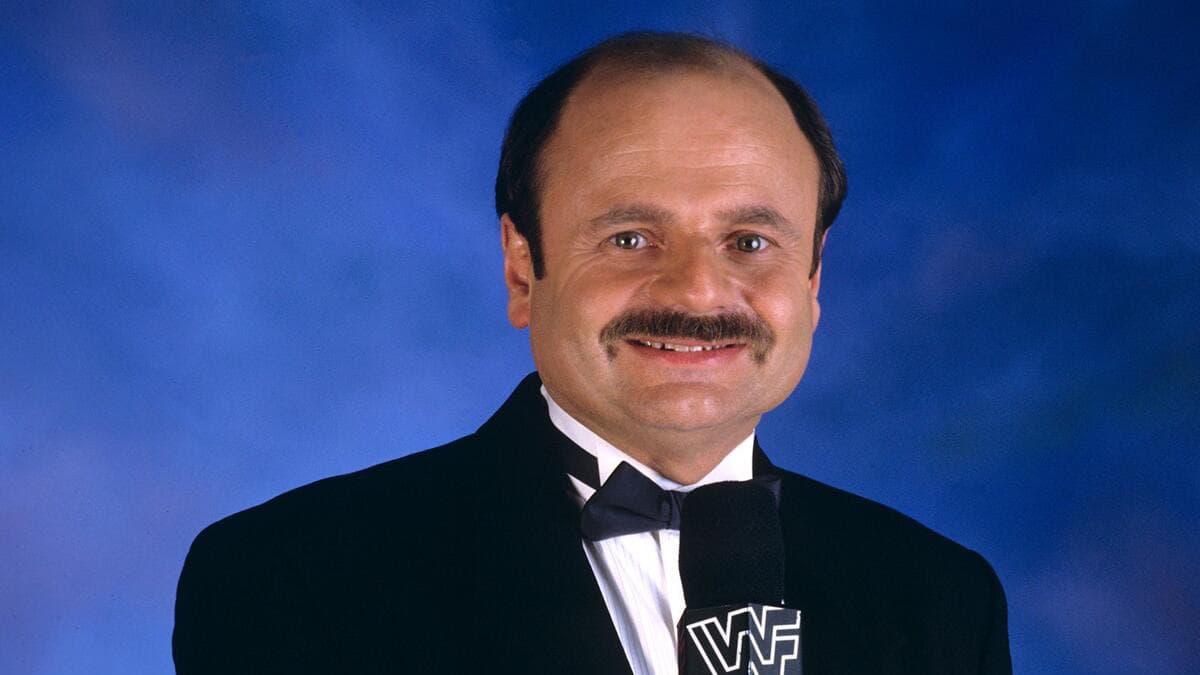
Planning began in earnest and it was decided WrestleMania would take place at Madison Square Garden on Sunday, March 31. Cyndi Lauper would serve as one of the star attractions, once more seconding then-WWF Women's Champion Wendi Richter to the squared circle.
She wouldn’t be the only celebrity at the event. Like Hulk Hogan, Mr. T once shared the ring with Rocky Balboa in Rocky III as Clubber Lang, while Mr. T was by now a huge star in the United States as court-martialled mercenary BA Baracus on hit NBC series The A-Team.
Not only could Mr. T cross over well with viewers that enjoyed cartoonish, over-the-top violence, but he was also popular with children, starring in his own Saturday morning cartoon series, also on NBC, making him tailor-made for the WWF and WrestleMania.
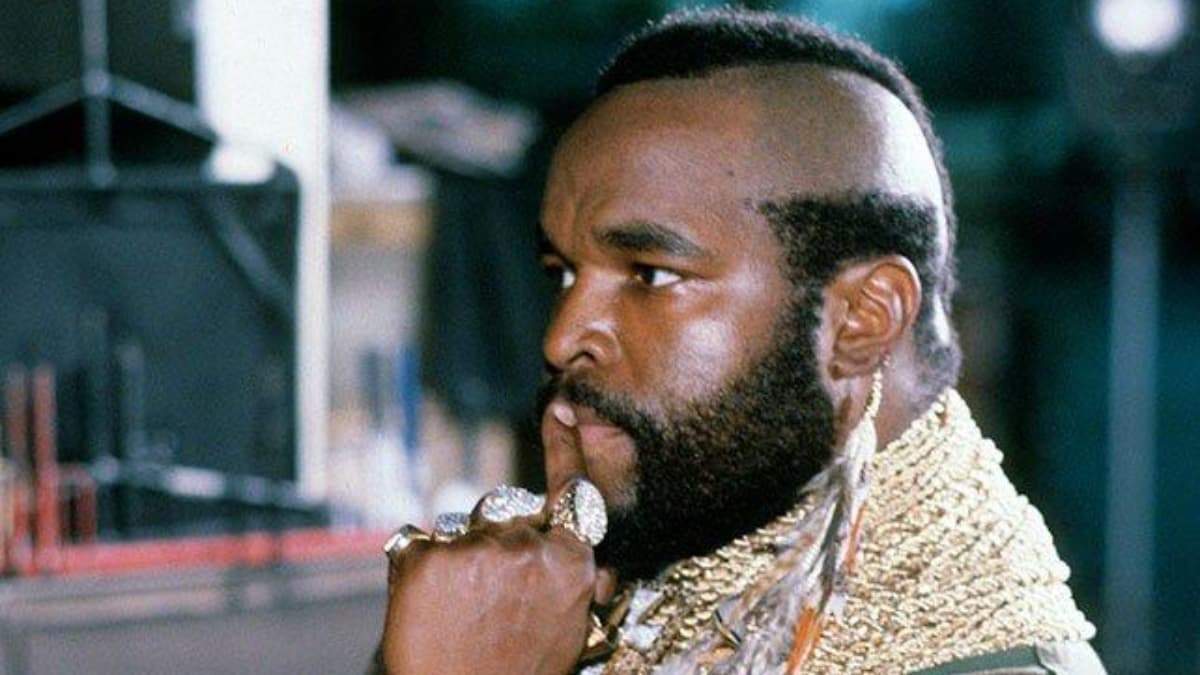
To introduce Mr. T into WWF TV, Roddy Piper, who by now was the top heel in the company, Piper paid a visit to the set of the A-Team in mid-February 1985 and inflamed hatred within his target by accusing Mr. T of being a bad influence on children, which led to a brawl between Hot Rod and Mr. T. The two-minute confrontation aired on TV just over 48 hours before the most high-profile match of Roddy Piper's career, and Mr. T would be watching.
The WWF returned to Madison Square Garden on Monday, February 18, with the spiritual sequel to The Brawl to End it All in The War to Settle the Score. The entire card was broadcast on the MSG Network, but MTV would simulcast the main event of WWF Champion Hogan defending against Piper, with Hot Rod seconded to the ring by “Cowboy” Bob Orton, while Hogan had Cyndi Lauper and a since-turned-babyface Lou Albano in his corner.
The original plan was for Piper, like many heels before him, to be defeated by The Hulkster, but that didn’t work for Piper and he refused, noting how being pinned by the WWF Champion would leave him with no momentum going into WWF’s biggest ever show, especially since he was planned to be a part of the main event. To compromise, the finish was changed to a DQ.
After a referee bump, Paul Orndorff hit the ring to help Piper attack the champion, to which an irate Lauper jumped to the apron, screaming at the heels. With Hogan incapacitated, Piper and Orndorff slowly closed in around Lauper, but a curious ringsider intervened in Mr. T.
The A-Team star had been watching the night's matches from the capacity crowd, and had even run off veteran Rene Goulet following a confrontation earlier in the night. Here, he pulled Lauper to safety, then turned to stand up to the heels himself. Though Piper and Orndorff got the jump on the TV star, Hogan suddenly recovered, stupefying the bad guys. A chaotic scene followed, one that embedded the hook deeply in the collective mouth of the MSG crowd.
The 9.1 TV rating edged out the number done by the previous July's Brawl, giving MTV another ratings smash. Soon, the main event of the first WrestleMania was set in Roddy Piper and Paul Orndorff vs. Hulk Hogan and Mr. T.
Untrained celebrities had been used in refereeing, managing and promotional capacities to build interest in a wrestling match before, but seldom had they actually wrestled, and the decision wasn’t a popular one with the WWF roster.
A week before The War to Settle the Score, Mr. T was visiting a WWF house show in Los Angeles when David Schultz tried to attack him. Bret Hart later claimed that Schultz's intention was to create buzz for himself so that the WWF would have no choice but to include him in the WrestleMania main event. If true, then it backfired spectacularly, as Schultz was handcuffed by police right there in the locker room, and subsequently fired.
Piper felt that Mr. T didn't respect the business, and neither did Orndorff. Nikolai Volkoff acknowledged that a lot of the locker room felt Mr. T didn't belong there, with Gene Okerlund later saying, “Mr. T could rub anyone the wrong way. He was making a lot of money, and he was leading Hogan around by the arm, when it should have been the other way around.”
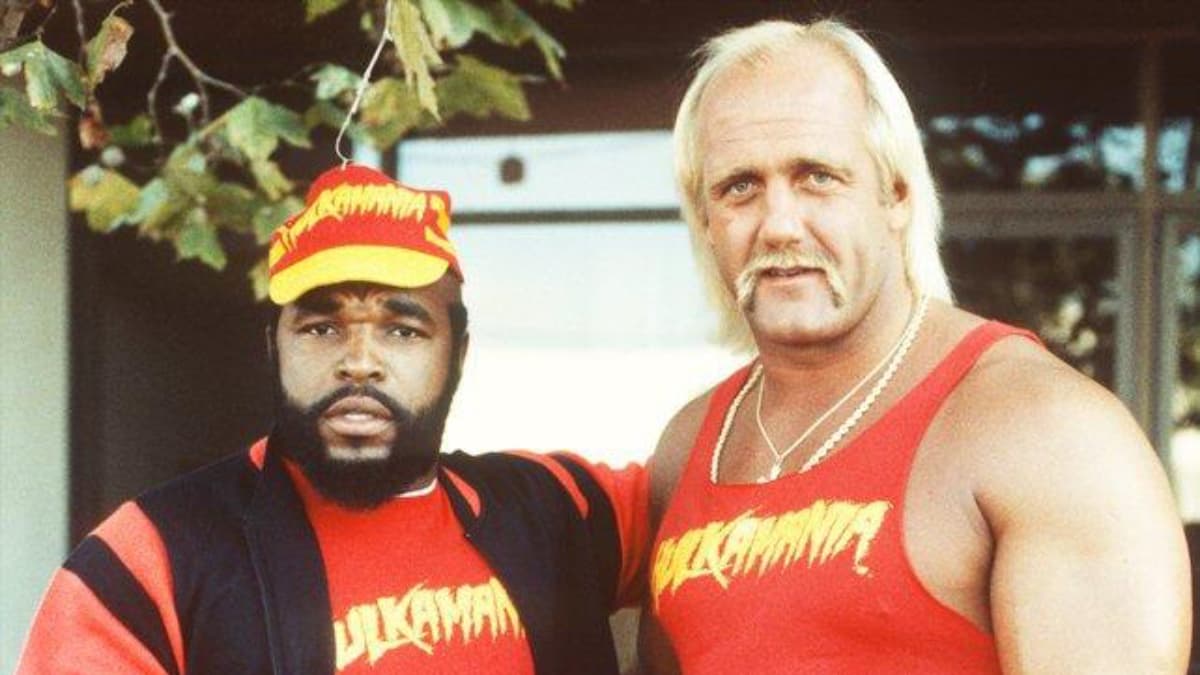
Nonetheless, Vince McMahon was banking on Mr. T's celebrity to aid the most aspirational event of his life. Roddy Piper made no bones about his dislike of Mr. T, but for the sake of business, there had to be harmony.
Mr. T wouldn’t be the only celebrity at WrestleMania, though. Combustable New York Yankees manager Billy Martin was scheduled to serve guest ring announcer, while flamboyant maestro Liberace was brought in as timekeeper. Boxing great Muhammad Ali would patrol the ringside area as guest outside referee for the main event, with Pat Patterson serving as the official inside the ring to help Mr. T walk through his portions of the main event.
The rest of the nine-match card was soon fleshed out. Wendi Richter had lost her WWF Women's Title to upstart Leilani Kai (backed by Moolah) at the same MTV special, and sought to regain it at WrestleMania, once again with Lauper in her corner.
Andre the Giant had been warring with The Heenan Family for months, and especially had issues with Big John Studd and Ken Patera, who took the Giant down and forcibly cut his hair in a December 1984 TV angle. At WrestleMania, Andre would stand across the ring from the equally-looming Studd in a match where to win you had to bodyslam your massive opponent. Studd and Heenan wagered $15,000, whereas Andre was betting his career.
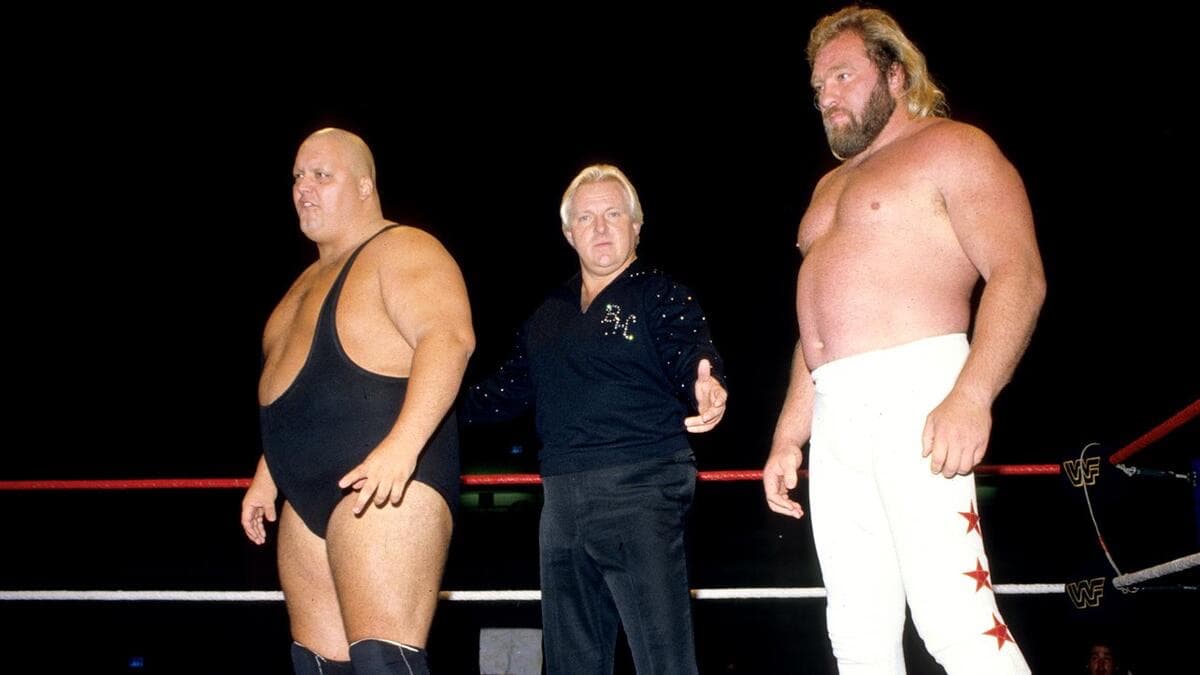
Barry Windham and Mike Rotunda won the WWF World Tag Team titles in January, ending the nine-month reign of Adrian Adonis and Dick Murdoch. Instead of a high-profile rematch, the US Express would instead face America-hating heels in The Iron Sheik and Nikolai Volkoff.
WWF Intercontinental Champion Greg “The Hammer” Valentine, meanwhile, faced Junkyard Dog and Tito Santana went one-on-one with The Executioner. In the threadbare build to the match, Executioner revealed he was acting as an assassin of sorts on behalf of The Hammer, targeting Santana's repaired knee.
A pair of new arrivals were given showcase bouts. The mammoth King Kong Bundy had joined in under the tutelage of Jimmy Hart, he himself debuting after a long stint pestering Memphis crowds. The 450-lb Bundy would take on Special Delivery Jones in what seemed like an obvious mismatch.
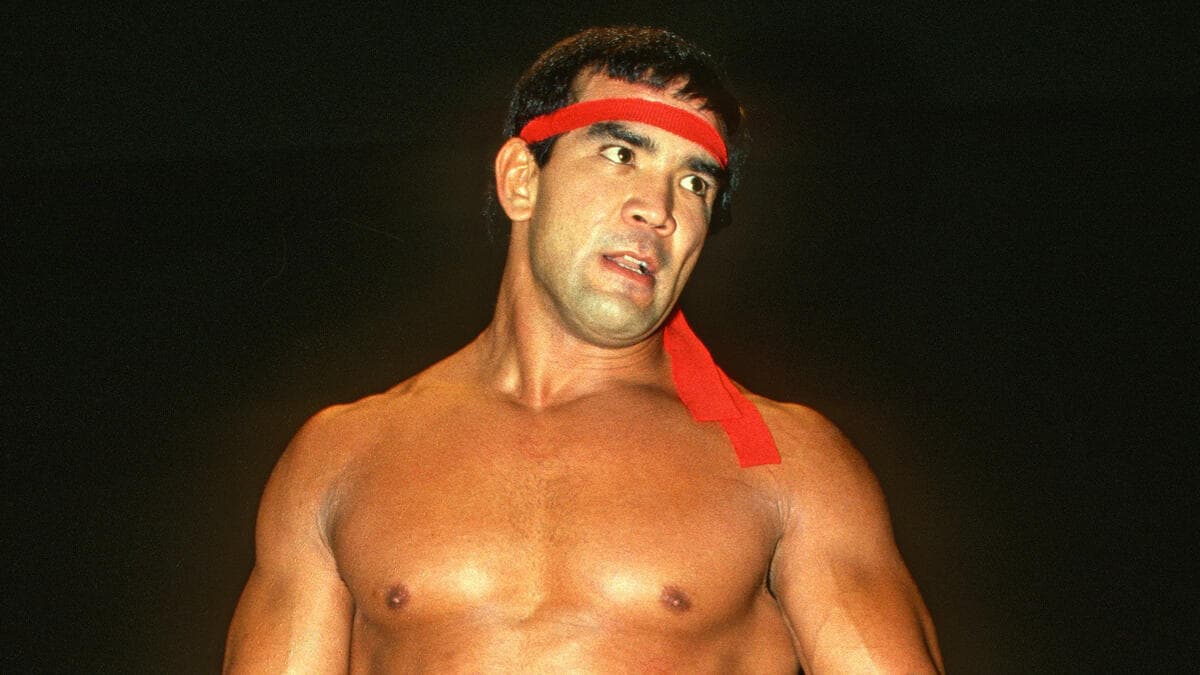
Coaxed away from Jim Crockett Promotions was also one of pro wrestling's most dynamic athletes and performers in Ricky Steamboat, who faced second-generation wrestler Matt Borne (the future Doink). Bruno Sammartino was also on the card, cornering his son Dave to the ring for his match against Brutus Beefcake.
A capacity crowd was expected for Madison Square Garden, with the hopes of drawing big audiences nationally at closed circuit viewing locations, with the show taking place before the WWF entered into the pay-per-view market.
Vince McMahon needed WrestleMania to succeed. The WWF took a substantial financial toll throughout 1984 due to the expansion, with McMahon paying prohibitively for television clearance in fresh regions across North America, in addition to the expanded roster.
While there were successes and sellouts to the WWF name, not every touring stop was a money-winner. The national expansion was a hit in some respects, but certainly not all, and success was nowhere near assured.
By WrestleMania, Vince McMahon was in debt and he even put up his house to procure necessary financing for the card. The March 31 event was a gamble, and if it went badly, bankruptcy was almost certain.
However, in the run-up to WrestleMania, McMahon received a very timely payout from Antonio Inoki, the omnipotent leader of New Japan Pro-Wrestling. A falling out between Inoki and booker Hisashi Shinma (who had prior WWF ties) led to Inoki cutting an exclusive six-figure deal with Vince to continue their association. More cash flowed from the sale of the TBS time slot to Jim Crockett Promotions.
Money wasn't the only issue headed into WrestleMania, however. Days before the event, as part of the media blitz, Hulk Hogan and Mr. T appeared on Hot Properties, a cable talk show hosted by comedian-turned-TV detective Richard Belzer.
Belzer pressed Hogan to demonstrate one of his manoeuvres on him, which Hogan did by applying a front facelock, similar to a guillotine. After cinching up the comic for a few seconds, Belzer suddenly went limp. When Hogan released the hold, the host fell to the floor, splitting the back of his head open on impact. Belzer later sued Hogan over the incident, and the case was settled out of court.
Another issue was the finish of the WrestleMania main event. Roddy Piper was reportedly asked to lose cleanly, and once more he put his foot down. Hot Rod was concerned that if he lost to a celebrity like Mr. T, then his credibility would be shot. In a time where kayfabe was at least still somewhat-enforced, Piper was not laying down for some guy from Hollywood, especially one he didn't respect.
As for Mr. T, he had his own issues. The animosity between he and Piper manifested paranoid feelings in the mind of BA Baracus. His macho roughneck image was at stake in this publicity stunt, and he was counting on cooperation from two talented veterans in Piper and Orndorff to ensure that he didn't look bad.
Reportedly, Mr. T feared that Piper and Orndorff might try to shoot on him during the match. Given that both were considered tough guys, should things come to an actual fight, what if Mr. T couldn't hold his own? He would be humiliated in front of a huge national audience, unable to back up his well-crafted image.
Several wrestlers remembered Mr. T almost backing out of the match at the eleventh hour. For his part, Hogan apparently convinced security to let non-credentialed members of T's entourage backstage, reasoning that if anything were done to upset Mr. T, he might just get up and leave, sabotaging the highly-publicised main event.
In the early afternoon of March 31, 1985, before over 19,000 fans inside Madison Square Garden, and with many more watching at closed circuit locations across the United States, WrestleMania had arrived.
Gorilla Monsoon and an uncharacteristically-nervous Jesse Ventura welcomed the audience to an event that Monsoon would refer to as "a happening" no less than three dozen times over the hours ahead.
Tito Santana kicked things off with a bang, electrifying MSG with his quick win over The Executioner. King Kong Bundy followed by squashing Special Delivery Jones in an official nine seconds, when the match actually ran much closer to 25 seconds.
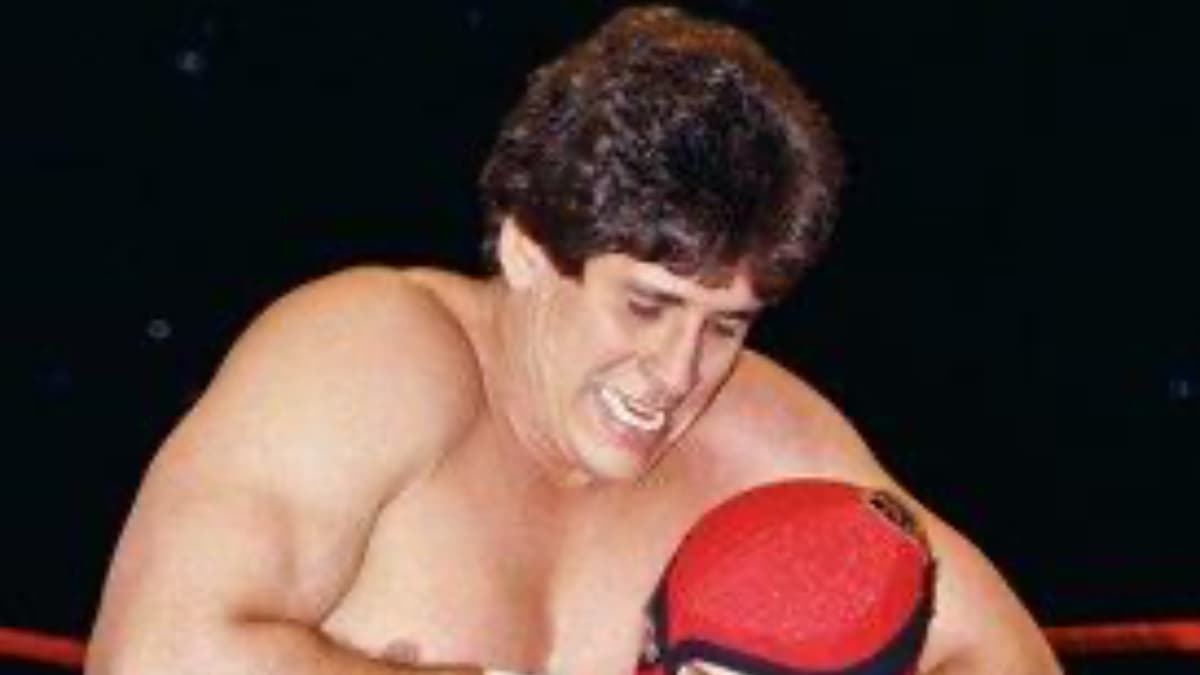
In the third match of the night, Ricky Steamboat picked up the win over Matt Borne in a spirited bout, followed by Brutus Beefcake and David Sammartino brawling their way to a somewhat tedious double-DQ. More excitement came from the involvement of father Bruno Sammartino, who was cheered just as hard for his assault on manager Johnny Valiant as he was inside MSG in the 1960s.
Junkyard Dog then defeated Greg Valentine but he failed to win the Intercontinental Title when The Hammer took a count-out loss. The first title change of the afternoon then took place as The Iron Sheik and Nikolai Volkoff unseated The US Express to become WWF Tag Team Champions.
In the seventh match of the event, Andre the Giant avoided being slammed by Big John Studd and instead slammed Studd to the mat to bag $15,000. In the semi main event, Wendi Richter regained the WWF Women’s Title she had lost, defeating Leilani Kai following a Crossbody reversal. Cyndi Lauper also had her moment to shine when she attacked The Fabulous Moolah, blocking the ageing villainess from interfering.
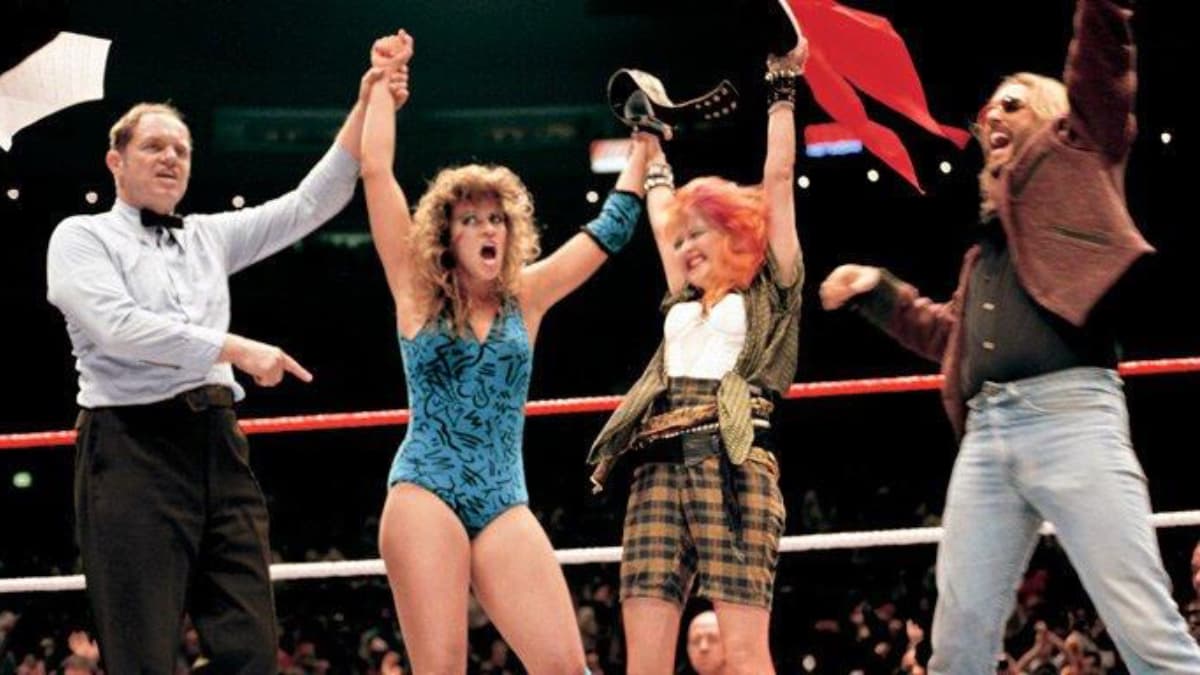
It was then time for the main event. The guest dignitaries entered first, with Liberace making his entrance alongside members of the Rockettes dance troupe. The buzz in the air then turned appropriately sour at the sound of bagpipes, as Roddy Piper, Paul Orndorff and cornerman Bob Orton were preceded down the aisle by a Scottish procession. After the New York crowd booed the trio, the familiar strains of ‘Eye of the Tiger’ filled MSG and the crowd was electric for Hulk Hogan, Mr. T, and cornerman Jimmy Snuka.
Despite all prior tension between Piper and Mr. T, the two mostly worked together well enough, sticking to mat wrestling basics. In a memorable visual, Piper allowed T to lift him into a fireman's carry, which Piper loathed taking part in.
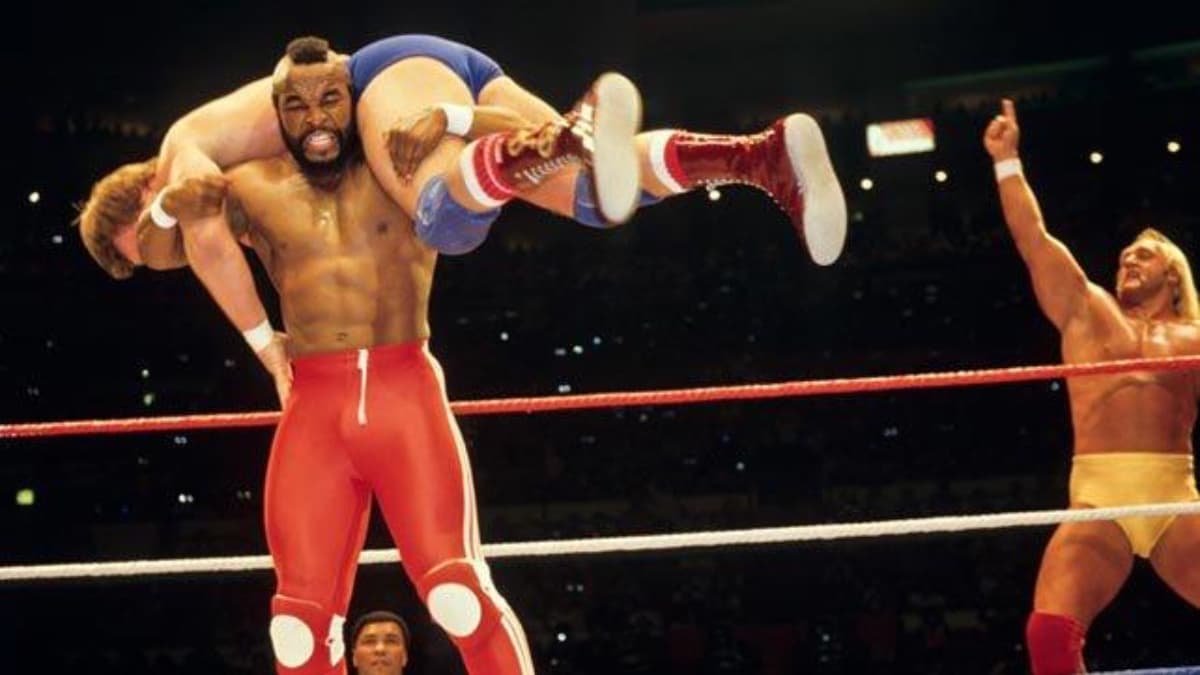
The match was basic, its structure a textbook tag formula, with everybody playing their part accordingly. During a topsy-turvy closing scene, Orton attempted to interfere, diving onto Hogan. However, the Cowboy accidentally struck Orndorff with his forearm cast, and Hogan covered the dazed Mr. Wonderful for the win, setting off a frenzy among the thousands in attendance.
Critical reaction may have been mixed, but many fans were over the moon with WWF’s concoction of glamour, athletics, and showmanship at WrestleMania. The most jubilant was Vince McMahon himself when it was revealed that over one million people watched WrestleMania at closed circuit locations, with the event grossing between $4 million and $6 million.
Not only was the WWF not at death's door, but thanks to the WrestleMania gamble, the company was healthy.
WrestleMania has since been cemented as WWE’s biggest show of the year, and while there have been poor editions of the event, it remains circled in most pro wrestling fans’ calendars.